New Delhi: Researchers at National Institute of Technology (NIT)-Rourkela have patented a method to convert inactive proteins discarded by pharmaceutical companies into hydrogels that could have applications in wound healing, tissue regeneration and drug delivery, officials said.
The findings of the research have been published in the Royal Society of Chemistry’s Journal of Materials Chemistry. Proteins perform a wide range of functions in the human body, including tissue repair and regulation of biological processes, and are central to modern medicines and regenerative therapies.


However, they are delicate molecules that can lose their three-dimensional structure when exposed to heat, chemicals or harsh processing conditions, said Harekrushna Sahoo, professor in Department of Chemistry at NIT Rourkela.
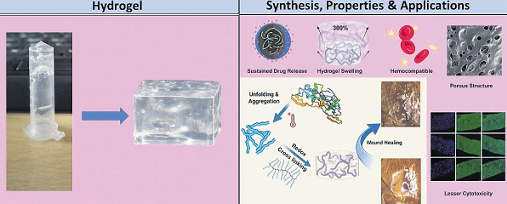
“Once unfolded, the molecules tend to stick together forming clumps known as aggregates. This aggregation causes proteins to lose their biological function. As a result, pharmaceutical and biotechnology companies typically discard them,” he said. The research team has developed a process to convert such discarded proteins into wound-healing hydrogels.
For this, the researchers heated bone morphogenetic protein-2 (BMP-2) to about 85 degrees Celsius for 10 minutes, causing it to unfold. Chemical reactions then caused the unfolded proteins to aggregate. Hydrogen peroxide and hyaluronic acid were subsequently added to the aggregates to form a gel. The material contains tiny pores that allow it to absorb water, retain medicines and interact with body tissues.
“The synthesis and performance are associated with the synergistic contribution of BMP-2 protein and hyaluronic acid, particularly its water-retention properties, which improved the hydrogel architecture, antioxidant activity and sustained drug-release characteristics,” Sahoo said.