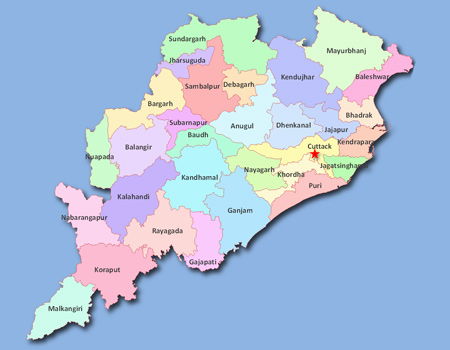
Bhubaneswar: As 2025 comes to an end, Odisha witnessed a year of hope and distress, from security and industrial gains to tragedies such as the self-immolation of a college student, a stampede during the Puri Rath Yatra, and controversy over the hike in salaries and allowances of MLAs.
One of the major positives for the state was its progress towards becoming a Naxal-free state, with security forces neutralising six red rebels, including CPI(Maoist) central committee member Ganesh Uike, who carried a bounty of Rs 1.1 crore on his head.

The year also saw around 22 Maoists surrender before police under the revised Surrender and Rehabilitation Policy, which offers incentives of up to Rs 1.20 crore depending on rank.
Chief Minister Mohan Charan Majhi lauded achievements in the industrial sector, including the sanction of two semiconductor units and projects worth Rs 4.38 lakh crore for the state.
Noting that the industrial sector is passing through a transitional process from mineral-based to manufacturing hub, Majhi said the state signed two MoUs worth Rs 4,000 crore for semiconductor units.
The opposition BJD, however, accused the BJP government of making “false claims” of industrialisation.
The party alleged that several major projects, including the JSW Group’s Rs 40,000-crore EV battery project and the Rs 1-lakh-crore ArcelorMittal Nippon Steel project, were shifted to Maharashtra and Andhra Pradesh, respectively.
The state hogged the national spotlight over a series of distressing incidents, including the death of a college student in Balasore district following self-immolation while seeking justice in a sexual harassment case.
The July incident drew widespread attention after a video of the burning woman running in the college corridor surfaced on social media. A week later, a minor girl of Delang in Puri district suffered burn injuries and later died at AIIMS, Delhi.
Similar incidents involving women were reported from Kendrapara and Baragarh districts.
The state also witnessed cases of sexual assault, including the gang rape of college students at Gopalpur beach in Ganjam district and at Baliharchandi tourist spot in Puri district, as well as the rape and murder of a teenager in Keonjhar district.
Crimes against women drew sharp criticism from opposition parties, with Leader of Opposition Naveen Patnaik alleging a complete breakdown of law and order.
The opposition parties alleged that as many as 40,947 cases of crime against women have been registered during the BJP’s 18-month rule in the state.
The Majhi government, however, maintained that swift action was being taken in such cases.
The state also witnessed incidents of mob violence during the year.
In one case, a migrant worker from West Bengal was killed after a mob suspected him of being a foreign national for failing to produce an Aadhaar card.
In September, a 35-year-old Dalit man was attacked by a mob on suspicion of killing a cow in Kundeijuri village of Deogarh district, leaving his aide injured.
In Ganjam district, two Dalit men were subjected to assault after being falsely accused of cattle smuggling, prompting condemnation from civil society groups.
The government faced criticism over the management of the annual Rath Yatra in Puri, after a stampede claimed three lives. The Chief Minister apologised to devotees over the incident.
The death of two Nepalese students in Bhubaneswar prompted diplomatic concerns and visits by officials from the neighbouring nation.
Besides these, natural calamities continued to affect the state, with floods in northern districts, unseasonal rainfall damaging crops, and Cyclone ‘Montha’ narrowly missing the coastal state.
The government recommended a CBI probe into a multi-crore sub-inspector recruitment scam, in which over 100 aspirants were arrested.
Politically, the year saw organisational changes across major parties.
BJP leader Manmohan Samal was reappointed as state unit president, while Patnaik continued as BJD president for a ninth term. The Pradesh Congress Committee got a new president in Bhakta Charan Das.
The year also saw the Nuapada assembly bypoll following the death of BJD MLA Rajendra Dholakia. His son Jay Dholakia contested on a BJP ticket and won.
Five-time Chief Minister Naveen Patnaik’s health continued to remain in the headlines as he was hospitalised twice during the year.
The Majhi government faced criticism after the Assembly unanimously passed three Bills to triple the salary and allowance of legislators, raising the minimum package for MLAs to Rs 3.45 lakh per month from Rs 1.10 lakh. The Bills are yet to receive the Governor’s assent.
In a historic first for the state, President Droupadi Murmu addressed the Odisha Assembly in November.