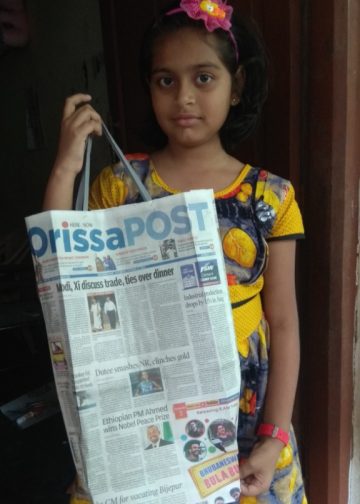
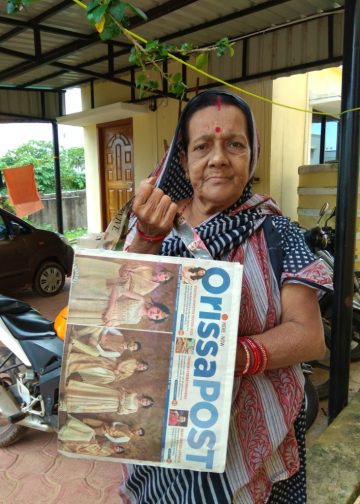
Khunta: Hundreds of people who used to eke out a living by making jute products in Mayurbhanj district are now facing an existential crisis, largely in part due to dwindling marketing facilities and partly due to scarcity of jute.
The sharp decrease in jute cultivation has compounded the woes of such artisans, who in earlier days used to make brisk business by selling rope, tethers and coarse threads made of jute.
“Back when the farm sector was far from being mechanized, we used to earn a decent livelihood. Now there is no use for our products. The plastic boom has flushed us out of the market,” says Gunanidhi Mohapatra, a villager of Gopabandhunagar block where there exists a sizeable number of jute artisans, now fallen on hard times.


Over 50 families living in Jadrughera village under Gopabandhunagar block used to earn their living by making a variety of products from jute, apart from carrying out paddy cultivation.
“As the economy was predominantly agrarian by nature, there was high demand for ropes for binding paddy in bullock carts, making cots, tethers for cattle and other livestock,” said Gunanidhi.
“For generations, people belonging to Gola community were engaged in this occupation for generations. Till a few years ago, all was well. The agriculture was solely dependent on domestic animals as farms were not mechanised yet. Now, plastic products are eating away at the jute market. As a result, families eking out their livelihood from jute are going through a hard time,” Gunanidhi said.
Plastic products are making inroads even into rural areas as they are cheap, but they are not as sturdy and reliable as our products, Gunanidhi added.
Unable to compete with the influx of plastic products, the jute artisans have been forced to switch to alternate occupations, thus suffering not just financial losses but also the ignominy of breaking with a traditional vocation.
Another artisan Kartik Mohapatra said many people used to cultivate jute in the area and jute was easily available for them, but now the material is supplied from either Balasore or West Bengal. Its price has gone up sharply, Kartik said.
Jute artisans of the area said there is a need for skill upgradation for the younger generation so that they can make some decorative products which are still in demand. Creating a market for such products is also necessary, the artisans said, adding this is the only way to save this traditional occupation from going extinct. PNN