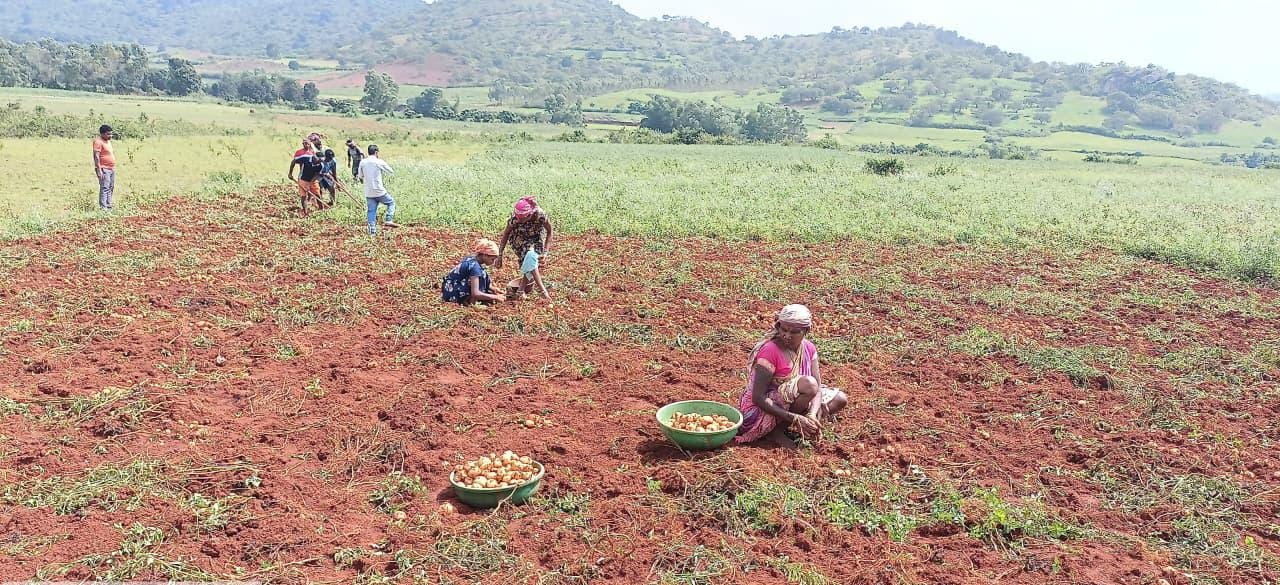
Koraput: Climate change has reportedly put a dent on potato cultivation in Koraput district, where farmers report lower yields and poor-quality produce this season.
As per official reports, erratic and excessive rainfall, coupled with rising temperatures during dry spells, adversely affected the tuber crop. Potatoes were cultivated over 3,500 hectares during the kharif season, with a target yield of 150 quintals per hectare.


Under a subsidy scheme, the horticulture department supplied potato seed procured from the Odisha State Seed Corporation to farmers. While the plants showed healthy growth and good flowering initially, many cultivators suffered losses at harvest time.
Also Read: Odisha aims for potato self-reliance with 50,000-acre cultivation plan
Farmers complained of rotten potatoes, undersized tubers and fewer potatoes per plant. Rupak Turuk, a farmer from Umuri village under Koraput block, said his crop appeared healthy throughout the growing stage but yielded mostly rotten and small potatoes during harvest. He blamed inferior-quality seed for the losses.
Similar complaints were raised by farmers Krishna Mali and Arjun Mali of Patmaliguda village in Dasmantpur block.
Agriculture observer Sarat Patnaik said hundreds of farmers across the district have been affected by poor potato yields this year. He noted that Koraput requires around 200 bags of potato seed annually but has yet to become self-sufficient in producing quality seed locally.
When contacted, Sudam Biswal, deputy director of the Horticulture Department, said the situation this year was mainly due to the impact of climate change. He said some farmers sowed potato seed early or late this season.
In the district, kharif potato is cultivated as a 100-day crop. Tuber formation generally begins about 30 days after sowing, and the crop attains maturity between 30 and 60 days. During this stage, a temperature range of 17 to 20 degrees Celsius is required.
However, during the tuber formation period this year, heavy rainfall led to waterlogging in fields that lacked proper drainage facilities, resulting in crop damage. Biswal said fluctuations in temperature were also a key reason for the decline in potato production.
A crop damage report related to potato cultivation will be collected. Farms where more than 33 per cent of the crop has been damaged will be inspected, and eligible farmers will be included on a priority basis in various horticulture department schemes during the upcoming Rabi season.
Biswal said rain-fed potato grown in Koraput fetches good market prices during the festive season. He added that Koraput is suitable for potato seed production, and the government has taken steps to promote potato seed production in the coming year.