The Rashtriya Swayamsevak Sangh (RSS) is a large and well spread-out organisation by its own admission. It has today glamorous buildings and well-appointed offices across the country. It has marked its 100th anniversary with a host of celebrations, and a commemorative stamp and a coin released by Prime Minister Narendra Modi for the occasion. The RSS is the ideological parent of the BJP. Should such an organisation operate without adequate transparency, governance structures and public visibility into its ways of organising and influencing people on almost every aspect of civic life in the nation?
These are the kind of questions Karnataka Home Minister Priyank Kharge has repeatedly posed to the RSS. They go to the heart of the organisation’s structure, its existence and its journey. The Prime Minister has referred to the RSS as the “biggest NGO in the world.” Kharge has asked how and why such a large organisation refuses to register itself or publish its accounts when it works in the public sphere, uses public spaces and mobilises on a large scale. These are simple questions, but more significantly, they are good questions.
Also Read


In an “open letter” sent out earlier this year, Kharge wrote that the RSS’ “regular public mobilisation … raises legitimate questions about legal status, accountability, financial stability, public order, permissions, sources of funding, and compliance with the Constitution and laws of India.” The RSS has countered that registration is mandatory only when an organisation seeks government funds, and that Hindu dharma itself is not registered. But the smallest non-profit or labour union that has never used public funds is pushed to keep records and publish accounts. If the RSS is not registered, how does it apply for permissions, engage with the administration and get a Z+ security detail for its chief, each of which also draws on public funds. It is surprising that the RSS equates the entire Hindu faith it says it stands for to the organisation. Collapsing the two into one means any question raised about the RSS gets the colour of a challenge to the faith – and no questions get asked. This is disingenuous and does not present the RSS in a good light.
The RSS chief Mohan Bhagwat has pointed out that the RSS “is recognised as a body of individuals” under law and is under no legal compulsion to register. This is traced to article 19(1)(c) which guarantees the freedom to associate, subject to reasonable restrictions. The RSS also claims a tax-exempt status, traced to a 1994 case in which the Patna High Court ruled on the limited point that gurudakshina received by an RSS unit from its members was not taxable, on the principle of mutuality. The income computed by the tax department over nine years from 1967-68 to 1975-76, was shown as ranging between Rs 15,000 and Rs 71,000 a year, giving it the colour of a smaller unit with limited influence. Registration was not before the court in that case and has not come up since. Nor has the tax status.
Yet, well accepted concepts of flexibility and proportionality would suggest that governance must tighten as size grows and structure becomes complex. Charitable trusts above an income threshold must have their accounts audited, political parties must disclose donations above a limit, companies above a threshold must report their CSR spending. A local area group working with mutual contributions can work with internal self-checks, but if it grows its footprint into a wider movement with offices across the nation, then the public is entitled to ask how funds are raised, spent and governed.
Who, for example, owns the RSS buildings and offices? Compare this with the scrutiny ordinary citizens face: domestic workers are asked to submit to police verification, tenant agreements must similarly be recorded with police in certain areas, and housing societies must place their accounts before members every year — a tight prescription of governance for everyday citizens. But the RSS as the largest voluntary organisation in the country has said it will not register or file accounts. No other body of this size, and certainly none with this degree of access to a sitting government, operates outside norms that apply to the rest of the country. This is RSS exceptionalism, and there is no reason why it should be allowed to stand.
Issues of law or public trust apart, Kharge’s questions are politically significant. For the RSS, everything is better than it ever was. Activities are growing, circles of power listen and act on RSS concerns, the RSS is seen by many as the éminence grise shaping many government decisions. Its annual report gives an account of the wide nature and number of its activities (but no accounts). It has opened new areas of influence. RSS-linked candidates swept the elections at Mumbai’s iconic 222-year-old Asiatic Society of Mumbai library; others have embedded themselves in the Ganesh utsav mandals of Maharashtra.
Yet, the influence, the glamour, even the commandoes that move around to protect the RSS chief, come because the RSS is tied to the BJP. Needless to say, each has benefitted the other, the RSS in mobilising for the BJP and the BJP offering material comfort and the fulfilment of long-held wishes of the RSS. Both can be expected to hit back at Kharge.
But equally, the RSS is vulnerable like never before. It cannot escape the opprobrium directed at the BJP, particularly after the Jantar Mantar protests, and to that extent, will have to face some hard questions itself. Despite its huge influence and even control, the RSS has largely been a mute spectator if not an active participant in what is widely perceived to be a precipitous decline in democratic institutions, governance standards and service delivery. That is the political window of opportunity that Kharge has picked as he mounts a challenge to the RSS.
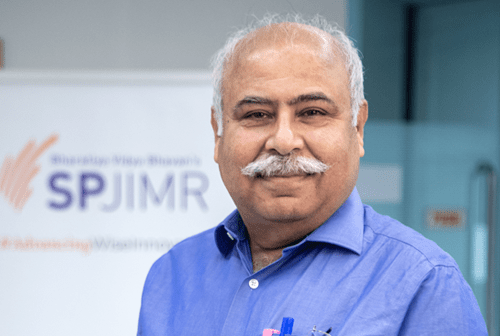
The writer is a journalist and faculty member at SPJIMR. ©The Billion Press