New Delhi: The power struggle at the top of the Tata Group following the death of former chairman Ratan Tata in 2024 has triggered a series of departures by senior figures closely associated with him, reshaping the balance of influence at India’s largest business conglomerate.
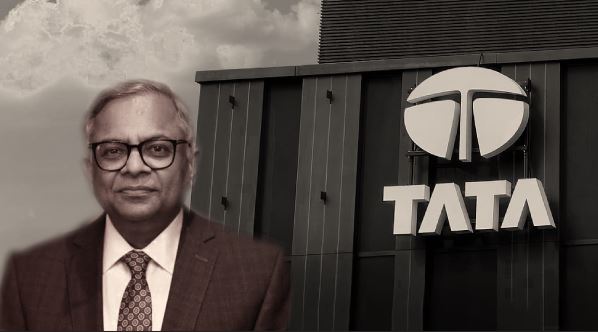
N Chandrasekaran, widely known as Chandra, became the latest high-profile exit on Wednesday, saying he would not seek reappointment as chairman of Tata Sons when his current term ends February 20, 2027.


His decision follows the gradual withdrawal of Ratan Tata’s trusted executives Vijay Singh and Mehli Mistry.
At the heart of the dispute is Tata Trusts, which holds about 66 per cent of Tata Sons and exercises decisive influence over the holding company of the salt-to-semiconductor conglomerate.
The Tata Sons board currently has six directors: chairman N Chandrasekaran, Tata Trusts chairman Noel N Tata, Tata veteran and Tata Trusts vice-chairman Venu Srinivasan, Group CFO Saurabh Agrawal, and independent directors Harish Manwani and Anita Marangoly George. Noel Tata, Ratan Tata’s half-brother, became chairman of Tata Trusts in 2024 after Ratan Tata’s death.
The board has undergone significant changes amid the wider Tata Trusts governance dispute. Vijay Singh, a former defence secretary and Tata Trusts nominee, left the Tata Sons board in 2025, while independent directors Ajay Piramal and Ralf Speth also retired.
Also Read : N Chandrasekaran to exit Tata Sons after reappointment standoff with Noel Tata
Who owns Tata Sons?
Philanthropic trusts collectively own about 66 per cent of Tata Sons, the holding company of the Tata Group. The two biggest shareholders are the Sir Dorabji Tata Trust, with 27.98 per cent, and the Sir Ratan Tata Trust, with 23.56 per cent, giving the two trusts a combined stake of 51.54 per cent.
Other Tata trusts holding shares include the JRD Tata Trust (4.01 per cent), Tata Education Trust (3.73 per cent), Tata Social Welfare Trust (3.73 per cent), RD Tata Trust (2.19 per cent) and Sarvajanik Seva Trust (0.10 per cent).
At the centre of the trusts is Noel N Tata, the chairman of Tata Trusts since October 2024 and a non-executive director of Tata Sons. The Sir Dorabji Tata Trust (SDTT), the largest single shareholder, recently inducted Neville Tata, Noel’s son, and former Titan chief Bhaskar Bhat as trustees for three-year terms; Venu Srinivasan is also a trustee and vice-chairman of SDTT.
The Sir Ratan Tata Trust (SRTT) has been at the centre of the recent governance dispute: Vijay Singh, its vice-chairman and a Tata Trusts trustee, has stepped down and will not seek renewal of his SRTT term expiring August 14, 2026, although he continues as an SDTT trustee. Venu Srinivasan has also been a key SRTT trustee, while Mehli Mistry, a close associate of Ratan Tata, has exited the trusts.
Trustees split into rival camps
The trusts became increasingly divided in 2025, with one camp aligning with Noel. Mistry emerged as the leader of the other group, comprising trustees Pramit Jhaveri, Jehangir HC Jehangir and Darius Khambata. Mistry’s links with the extended Shapoorji Pallonji family – which owns about 18.37 per cent of Tata Sons – added another dimension to the dispute.
Noel initially had the backing of Srinivasan and Singh, as the trustees clashed over board appointments and governance issues raised by Mistry.
Singh, a former defence secretary and nominee director of Tata Trusts, subsequently resigned from the Tata Sons board last year following opposition from the Mistry camp.
The principal flashpoint has been the composition of the Tata Sons board and the allocation of board seats at the holding company, which controls a group dating back 156 years and spanning hundreds of businesses, including around 30 listed companies.
The dispute was serious enough to draw government attention. In October last year, Noel Tata, Chandrasekaran, Srinivasan and trustee Darius Khambata met Union Home Minister Amit Shah and Finance Minister Nirmala Sitharaman as tensions over governance at Tata Trusts intensified.
Listing emerges as key fault line
A major point of disagreement has been whether Tata Sons should eventually be publicly listed.
Noel Tata is opposed to a listing, while Srinivasan and Singh have publicly supported the idea of listing the promoter holding company of the Tata Group.
Chandra, meanwhile, reportedly did not commit to Noel’s demand that he rule out a public listing of Tata Sons.
The disagreement over the group’s future ownership and governance structure has added to tensions between the trustees and Tata Sons management.
Srinivasan and Singh are also understood to have opposed a move by Noel Tata to appoint his son Neville Tata as a trustee of the Sir Ratan Tata Trust.
Board meetings of the Sir Ratan Tata Trust were cancelled twice this year, in January and May, for different reasons.
Mistry gradually withdraws
Mistry, who had repeatedly raised governance concerns at various Tata Trust bodies, subsequently began withdrawing from Tata Group entities.
One of his most significant moves was his resignation from the board of RNT Associates Pvt Ltd, the personal investment firm and family office established by Ratan Tata.
His departure was followed by growing friction between Noel Tata on one side and Srinivasan and Singh on the other, particularly over the future structure and governance of Tata Sons.
In April this year, Srinivasan resigned as a trustee of the Bai Hirabai Jamsetji Tata Navsari Charitable Institution, citing other business commitments.
The latest change came Tuesday, when Singh stepped down as a trustee of the Sir Ratan Tata Trust, a day before Chandrasekaran announced that he would not seek another term at Tata Sons.
Singh decided not to seek renewal when his current term expires on August 14. He will, however, continue as a trustee of the Sir Dorabji Tata Trust.
Chandra’s exit
Chandrasekaran said Wednesday that the Sir Dorabji Tata Trust and Sir Ratan Tata Trust had unanimously recommended extending his term as Tata Sons chairman for five years.
The proposal was subsequently recorded and recommended by the Tata Sons Nomination and Remuneration Committee and the board, he said, but failed to pass at a February 24 board meeting after one director did not support it.
“In the absence of unanimous support, I chose to defer the decision,” Chandra said.
Six months later, with no resolution reached, he said leadership clarity was necessary for employees, investors, partners and other stakeholders as Tata Sons pursues several strategic projects.
He, therefore, informed the board that he would not offer himself for reappointment after February 20, 2027, and asked directors to decide on his successor soon to ensure a proper transition.
Chandra’s decision marks a significant shift at the top of Tata Sons and leaves the board facing a succession decision at a time when competing interests within Tata Trusts remain unresolved.
The leadership transition will be closely watched because Tata Sons sits at the centre of the Tata Group’s ownership structure, and Tata Trusts’ majority stake gives the philanthropic bodies substantial influence over the conglomerate’s long-term direction.
PTI