


New Delhi: Opposition-ruled states like Punjab and Telangana Saturday demanded additional resources from the Centre in the 2026-27 Budget, and said that the 60:40 cost-sharing under the proposed VB-G RAM G scheme will impose further fiscal burden on already strained resources of the states.
Union Finance Minister Nirmala Sitharaman Saturday chaired the pre-budget meeting with the finance ministers of all states and UTs. Along with Union Minister for State for Finance Pankaj Chaudhary, the meeting was attended by the Governor of Manipur; Chief Ministers of Delhi, Goa, Haryana, Jammu and Kashmir, Meghalaya, and Sikkim; deputy Chief Ministers of Arunachal Pradesh, Madhya Pradesh, Odisha, Rajasthan and Telangana.
In a pre-Budget meeting, the opposition-ruled states said MGNREGA changes will weaken the employment guarantee and are against the spirit of cooperative federalism.
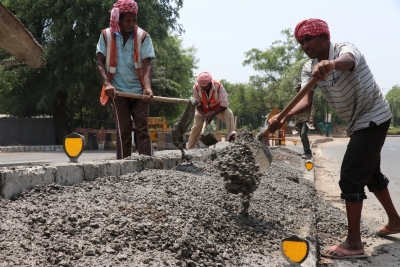
The Parliament had last month passed the Viksit Bharat Guarantee for Rozgar and Ajeevika Mission (Gramin) (VB-G RAM G) Bill, replacing the 20-year-old Mahatma Gandhi National Rural Employment Guarantee Act (MGNREGA). Under the VB G RAM G scheme, 60 per cent of the scheme cost will be borne by the Centre, and 40 per cent by the states, as against the 90:10 ratio under MGNREGA.
Punjab Finance Minister Harpal Singh Cheema expressed strong opposition to the proposed changes to the MGNREGA framework, arguing that the new model dilutes the employment guarantee and transfers a significant financial burden to states.
He called for the restoration of the original demand-driven structure and funding pattern of the scheme.
Proposed MGNREGA changes weaken employment guarantee, burden states, Cheema said at the pre-Budget meeting.
Telangana Finance Minister Mallu Bhatti Vikramarka said the Union government, without consulting states, has replaced the MGNREGA with the VB G RAM G scheme.
In the new Act, the scheme has been made from 90:10 to 60:40, thus imposing further burden on already strained resources of the states. Also, any additional man-days, which are above the normative allocation, will be the responsibility of the states. This will create a serious obstacle in providing demand-based work to job seekers, he said.
“This is entirely against the spirit of cooperative federalism and starving them of funds for capital outlay, which is essential for maintaining growth momentum,” Vikramarka said.
Vikramarka also demanded that surcharges, which are levied on income tax and corporation tax, should be credited to a non-lapsable infrastructure fund, from which states can be given grants for infrastructure development.
Alternatively, the entire amount of surcharges should be merged with basic rates to enhance the divisible pool of central taxes.
He said the GST 2.0 reform may boost demand, but expressed doubt if this can be sustained year after year. “It is expected that states’ revenues under GST may decrease due to rate reduction; a suitable mechanism needs to be put in place to compensate the states for the loss of revenue,” he said.
Besides, Punjab also demanded a special fiscal package from the central government, citing the “double whammy” of border tensions and floods in 2025.
On the issue of GST reforms, Cheema said that Punjab is facing an annual revenue loss of nearly Rs 6,000 crore following GST 2.0 reform, and pressed for a predictable GST stabilization or compensation mechanism for states.
PTI