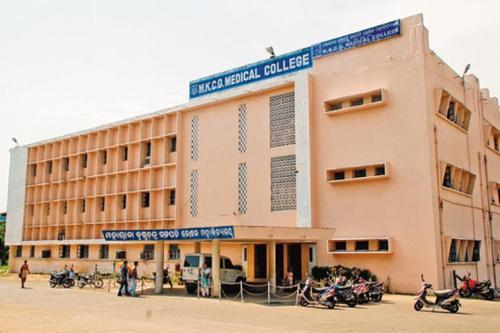
Barhampur: A rare conjoined twin born with two heads and a single torso has died at the state-run MKCG Medical College and Hospital, a week after birth, despite efforts by a team of doctors to save them, hospital officials said Sunday.
The newborn, diagnosed with dicephalic parapagus, was born October 11 to a 22-year-old daily-wage worker from a remote village under Tumudibandha police station limits in Kandhamal district.


It was the woman’s first pregnancy, doctors said.
This was the first such birth reported at the hospital, doctors said, describing the condition as extremely rare.
Despite a team of doctors trying their best to keep them alive, the twins died due to their complex health problems Saturday, MKCG Medical College and Hospital superintendent Sudeepa Dash said.
The parents were shocked after the birth of the conjoined twin through a Caesarean section and initially refused to take the body after the death, she said.
The body was sent to their native village in a hearse late Saturday evening following the intervention of the Ganjam district administration, and after officials persuaded the couple, Dash said.
The twins had been undergoing treatment in the Special Newborn Care Unit (SNCU) since birth, as their condition was critical, she said.
Despite the complex health condition, we tried to perform surgery to keep them alive. But it was not possible as the twin suffered from respiratory problems after a day of birth, said Manas Ranjan Dash, head of the Department of Paediatric Surgery at the medical college.
The twins survived for only a week despite the efforts of the paediatricians, he said.
The male infant weighed 2.25 kg at birth and had two heads and two necks sharing a single torso and two spinal columns.
However, it had a single heart and liver, along with one pair of arms and legs, doctors said.
The infant also had a single genitourinary tract with male external genitalia and an absent anal opening, they added.
Dicephalic parapagus is a rare form of conjoined twinning in which two heads share a single body. Such cases occur in approximately one in every 3 lakh births, and the chances of survival are very low, doctors said.