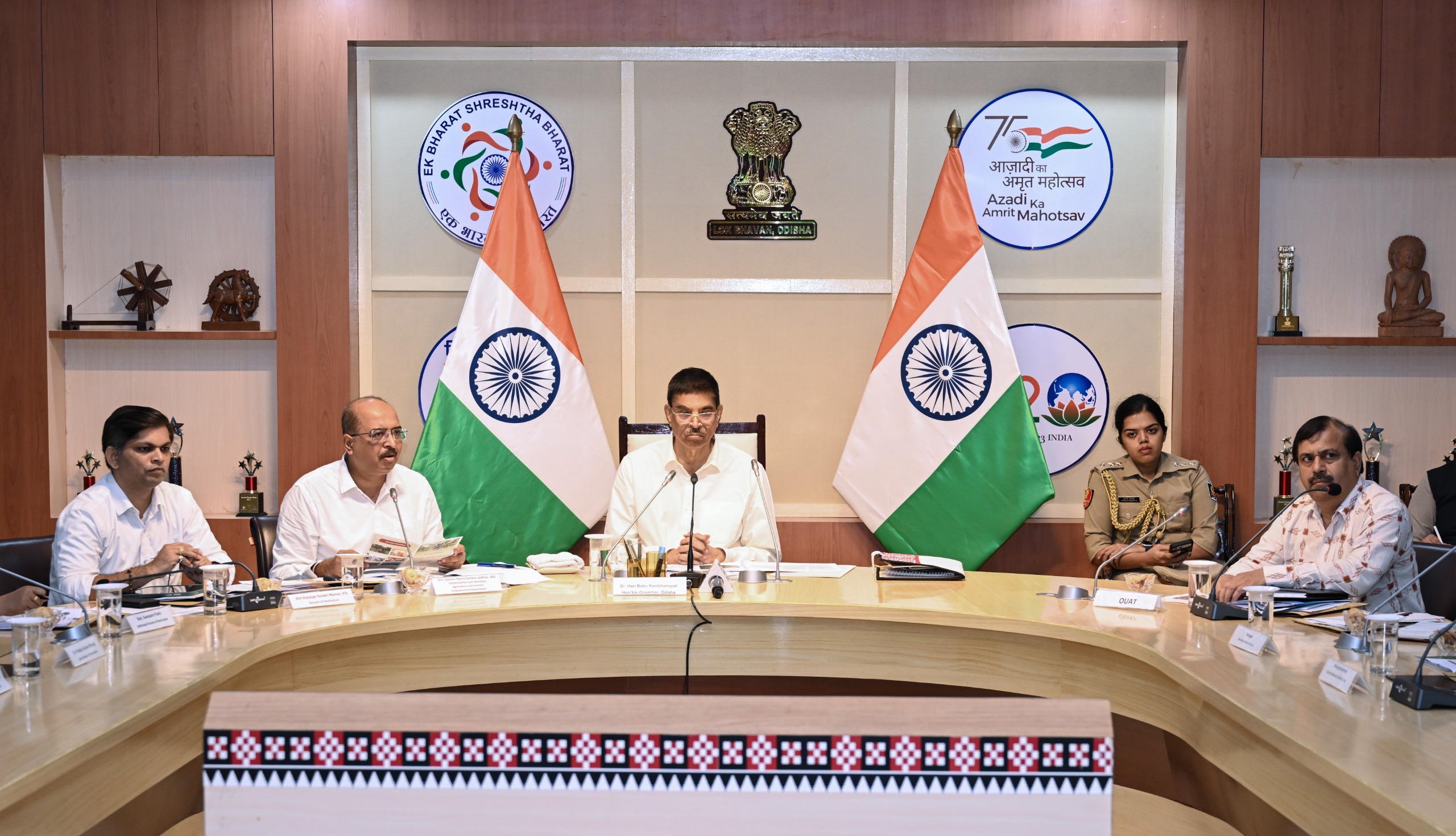
Bhubaneswar: Governor Hari Babu Kambhampati Friday called for a substantial increase in domestic edible oil production to reduce India’s dependence on imports, saying it would strengthen the national economy, conserve valuable foreign exchange and enhance the country’s food security.
Addressing a review meeting on the implementation of the National Mission on Edible Oils Oil Palm (NMEO-OP) at New Abhishek Hall in Lok Bhavan, the governor said that despite being an agrarian nation, India continues to import a significant portion of its edible oil requirement, resulting in a heavy outflow of foreign exchange.

“If we can reduce edible oil imports by increasing domestic production, it will significantly strengthen the country’s economy. This is an area that deserves focused attention,” he said.
Describing the mission as a key component of the vision of Atmanirbhar Bharat, Kam bhampati said expanding domestic edible oil production would not only reduce import dependence but also enhance India’s economic resilience by insulating the country from global market volatility, supply chain disruptions and fluctuations in international prices.
The governor noted that oil palm is the most productive among oilseed crops, yielding four to five times more oil per unit area than conventional oilseeds. Once established, he said, oil palm plantations remain productive for nearly three decades, providing farmers with a stable and long-term source of income.
He said the NMEO-OP adopts an integrated approach by providing support for quality planting material, irrigation, processing infrastructure, assured procurement, marketing and scientific extension services, thereby creating a conducive ecosystem for oil palm cultivation. Highlighting Odisha’s potential, Kambhampati said the state’s favourable agro-climatic conditions and extensive cultivable land make it well-positioned to emerge as a major contributor to India’s edible oil self-reliance.
He said the cluster-based implementation strategy adopted by the state government, in partnership with district administrations, research institutions and empanelled private companies, has the potential to build a sustainable oil palm ecosystem while transforming rural livelihoods.
The governor said the mission would promote crop diversification, generate rural employment, encourage agro-based industries, attract private investment and create opportunities in processing, logistics and marketing, while ensuring higher and more stable incomes for farmers.