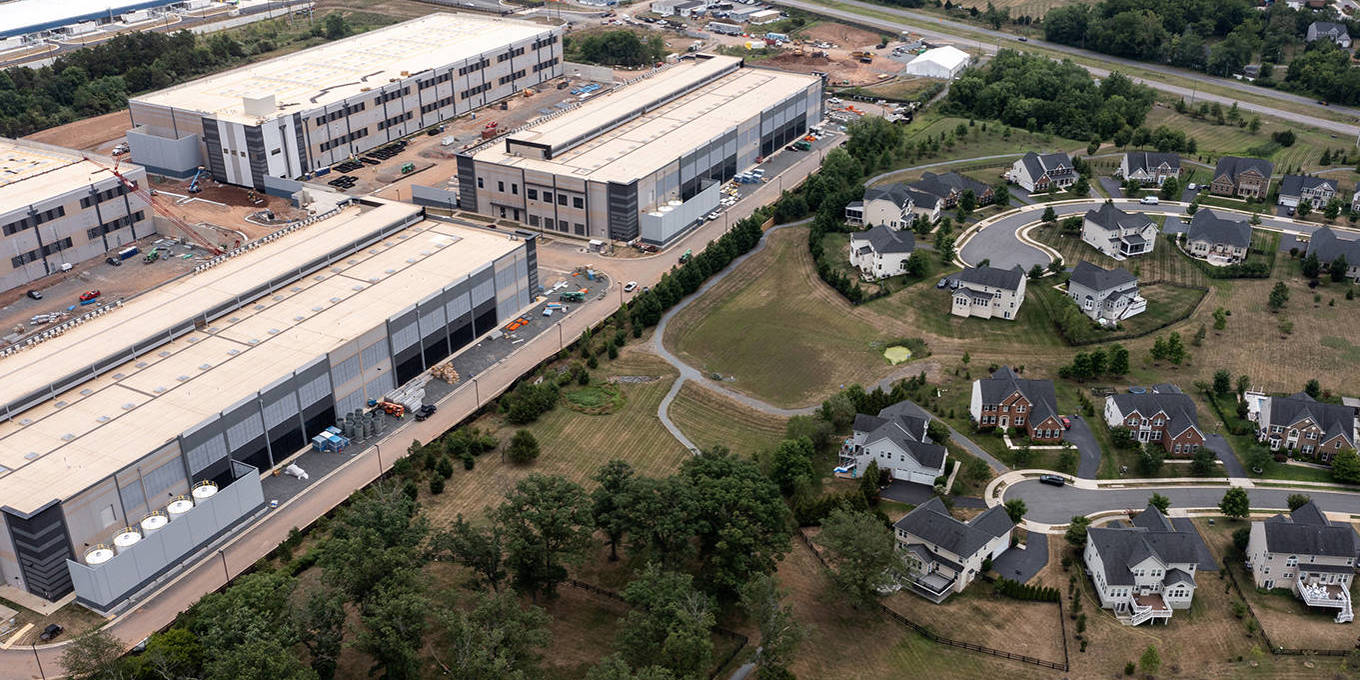
In a county in northern Virginia, a family’s electricity bill has doubled. A few miles away, a windowless building the size of a shopping mall hums through the night—yet another AI data centre, consuming more power than the town it was built beside. The dispute will be conducted in the language of rate structures, zoning variances, and transmission corridors. But a non-technical political question drives it: Are the people who live in the county still needed by the people who constructed the building?
The question is not just about AI. It concerns the bargain on which modern democracy rests.
Also Read


Democracy was never the gift of elites who discovered justice. Constitutions and elections are the visible machinery of limited government. But why did those with power accept limits at all? Rights were won by workers, women, soldiers, dissidents, and movements that made exclusion politically dangerous, and material dependence helped make those victories durable. When modern states needed armies of ordinary men rather than a warrior caste, they needed recruits, taxes, and sacrifice—and therefore some measure of consent. People asked to fight, pay, and suffer for a state will eventually ask what place they have in it.
A similar dynamic was apparent in industrial cities, which discovered that disease ignores class boundaries. Sewers, clean water, and quarantine laws reflected the recognition that a city’s poor breathe on its rich. Elites paid for the well-being of people they did not love because they could not be well without them.
Likewise, Henry Ford’s five-dollar day was not philanthropy. Mass production required mass consumption. Ford recognised the industrial order’s larger truth: wages, consumption, and output held each other up.
In short, because the powerful could not prosper without the cooperation of ordinary people, they had reason to honour claims they would rather have ignored. AI raises the possibility that this bargain is weakening.
It is not disappearing, at least not yet—and perhaps never in the crude form the futurists imagine. The technology may augment more workers than it replaces and create occupations no one has yet named. But the political danger is not that every worker will be made redundant. To destroy the democratic bargain, AI does not have to make ordinary people useless. It has only to make elites less dependent on them.
The older dependencies have already thinned. Wars are increasingly fought by professionals, contractors, and drones, and decades of automation have produced a narrow social stratum that is deemed intensely valuable, a larger group that is made insecure, and a great many citizens who are told, in effect, that their contribution is optional.
Suppose the technology delivers much of what its promoters promise, allowing firms to replace rather than merely assist large numbers of workers. An automated economy would not thereby lose its customers; it could sustain demand through exports, government purchases, credit, or transfers to households. But a society in which most people receive a stipend drawn from wealth they neither own nor govern distributes political leverage very differently from one in which people earn wages, pay taxes, organise, and bargain over production. The latter is full of conflict, inequality, and exploitation—but it gives citizens bargaining power because they have something to withhold. A stipend-based society may be richer in goods but poorer in standing. It could preserve consumption while hollowing out citizenship.
Data centres are not oil wells. But the political economy resembles the “resource curse” long associated with rentier states: when decisive wealth is generated from assets requiring little ongoing contribution from the population, a narrow group of rulers and owners has less reason to bargain broadly. The old slogan was “no taxation without representation.” But the darker converse is also true: when those who govern and those who own no longer depend on broad-based taxation, labour, or consent, representation begins to look less like a right than a cost they would prefer not to pay.
That is why the local politics of data centres is so important. The industry cannot manufacture everything it needs. It needs land, water, electricity, and local permission. Public resistance is already conspicuous. In a Gallup survey conducted in March, 71% of Americans opposed constructing a data centre in their own area, including 48% who strongly opposed it. People may be uncertain about AI in the abstract, but they understand a higher power bill, a threatened water supply, and an industrial facility promising few permanent local jobs.
Local permission is more than obstruction. It is one of the last forms of leverage available to citizens in an economy organised around assets they do not own and systems they cannot inspect. It is also why the uneasy alliance between Silicon Valley and the populist right is splitting at the substation rather than on the talk shows.
But local permission is leverage only so long as it must be asked for. A government sufficiently committed to the industry has other instruments—eminent domain, federal preemption of local siting authority, emergency authority over the grid—and US history is not reassuring about what befalls communities that hold land the powerful want and supply nothing the powerful need.
The answer is neither to halt the technology nor to romanticise the industrial order it may replace. That bargain was never fair enough. But if labour ceases to be the principal basis on which ordinary citizens claim a share of national wealth, citizenship will need another foundation—beginning with treating automated wealth as a public problem rather than a private achievement. That could mean public claims on the gains from automation, through taxation and through democratic control of the infrastructure on which AI depends.
The underlying arithmetic is simple. Every sanction that ordinary citizens have ever possessed—the ability to withhold labour, taxes, sons, or votes—presupposes someone who needs what you can withhold. Where there is no need, there is no leverage. Rights that no longer have a price do not vanish; they become favours, held at the pleasure of those who grant them.
For now, the citizens of northern Virginia still possess one thing the industry cannot code into existence: their permission. The question is whether they will use that leverage merely to say no or to demand a new bargain. The owners of the machines may come to need fewer workers. Will they be allowed to need fewer citizens?
The writer is Professor of Law at New York University School of Law. ©Project Syndicate