
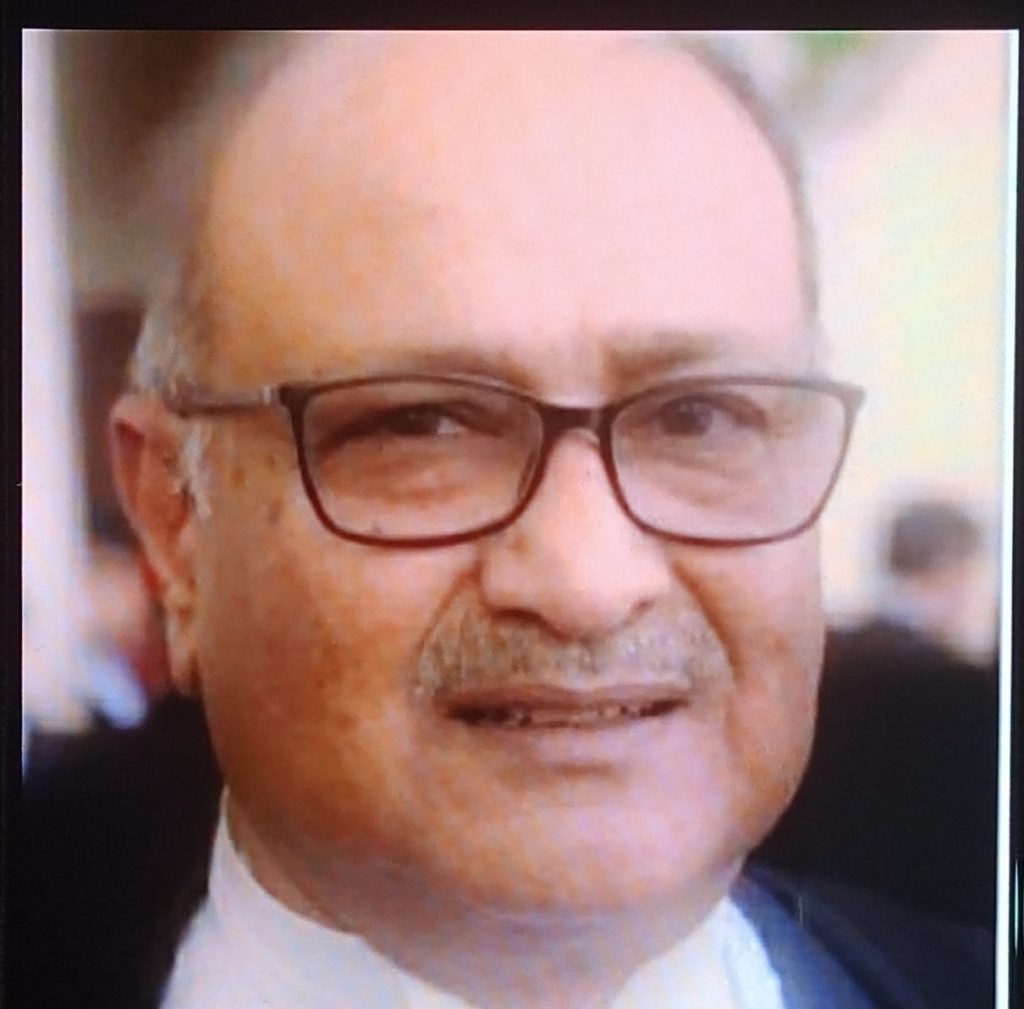
By Yasobant Das
Most airports in India today resemble crowded railway junctions that have accidentally acquired glass walls, escalators, coffee chains, and duty-free stores. Guwaha ti airport is no exception. The growth of air travel has democratised flying, which in itself is a wonderful development. Yet somewhere between accessibility and affordability, public etiquette appears to have missed the boarding announcement.
To be fair, the staff of the airlines and the CISF personnel are generally patient, efficient, and surprisingly courteous considering the volume and temperament of travellers they must handle daily. Their composure often appears the last surviving pillar of order amidst organised human congestion. The real trouble begins after security check, in the waiting lounges where modern Indian society unfolds in full public display.
There exists in these lounges an unspoken but aggressively practised principle: one passenger, two seats. One for the human being and the other for luggage, vanity, territorial expansion, or perhaps emotional support baggage. The astonishing part is not merely the act itself but the complete obliviousness to elderly passengers standing nearby searching helplessly for a place to sit. At Guwahati airport I recently encountered this phenomenon in textbook form.
The lounge was crowded beyond comfort. Chairs were occupied not merely by passengers but by handbags, backpacks, shopping bags, jackets, and occasionally attitudes. Three young people had success fully occupied six seats with admirable strategic efficiency. After standing for some time and gathering sufficient courage—not physical courage but social courage, which in modern India is often more exhausting—I politely asked whether the seat carrying two bags was occupied.
A distinctly unpleasant young man looked at me with the expression of a feudal landlord interrupted during revenue collection and curtly replied, “If you want to sit,” while removing the luggage with visible reluctance. I perched myself cautiously, fully conscious that I had disturbed the delicate ecosystem of entitlement.
Their cheese, so to speak, had been moved. The young trio radiated silent disapproval. One could almost hear their collective internal protest: “How dare this elderly gentleman inconvenience our bags?” As if this mild hostility was insufficient, the young lady seated opposite continued placing her feet repeatedly upon my seat. It was done not aggressively, perhaps, but with that casual indifference increasingly mistaken today for sophistication. One could do little.
She was a lady, probably younger than my own daughter. Correcting strangers in public has become socially hazardous. The older generation still carries remnants of restraint; the younger often mistakes restraint for weakness. So I endured. For a good fifteen minutes her feet remained near enough to qualify legally as co-passengers on my seat. Eventually, perhaps through fatigue or accidental awareness, she withdrew them. Peace returned briefly to the republic of discomfort.
Yet the incident remained fascinating. Not because of the inconvenience itself but because it represented something larger — the gradual erosion of shared civic sensitivity. Modern India speaks endlessly of growth, infrastructure, start-ups, digital revolutions, and global aspirations. Yet civilisation ultimately reveals itself not through airports but through behaviour inside them. A society is tested not by how it treats power, but by how it treats inconvenience.
And airports, perhaps more than any other modern institution, expose human character in transit. Then comes the fascinating sociology of airport toilets — an institution that silently reveals the true moral condition of society far more accurately than speeches on patriotism or declarations on social media. The tissue dispensing machines are designed with obvious scientific precision. The size dispensed is clearly intended for reasonable human use. Yet an astonishing number of people stand there pulling out tissue in endless multiples as though preparing for a national shortage.
One watches in disbelief. Pull. Pull again. Then another confident tug. At times, enough tissue is extracted to service a small conference room rather than a single individual. Whether this behaviour arises from greed, in security, habit, or the peculiar Indian delight in maximising anything available free of cost remains difficult to decipher. The tragedy is not merely wastage. Behind every unnecessary handful lies a silent tree somewhere paying the price for human carelessness.
Environmental concern, which people display eloquently during sem inars and WhatsApp activism, disappears mysteriously inside public restrooms. Perhaps because the tissue emerges soundlessly and anonymously, people assume nature too suffers silently and infinitely. Civilised societies are not built merely through airports, flyovers, digital payments, or luxury lounges. They are built through invisible habits — how softly one speaks in public spaces, whether one offers a seat to an elderly stranger, how much tissue one pulls from a dispenser, whether one leaves a washroom usable for the next person.
These are not matters of law. They are matters of culture. And culture unfortunately, can not be manufactured overnight through infrastructure projects or government slogans. It must be taught gently and repeatedly from childhood onwards. Schools perhaps spend excessive time teaching children how to become successful, but far too little teaching them how to become considerate.
Civic sensitivity should begin at the primary stage itself. A child taught early that public property belongs equally to others may grow into an adult less obsessed with occupying two chairs, wasting paper, or treating shared spaces as private kingdoms. These thoughts bother me increasingly. Perhaps because airports are modern India in miniature — aspiration without patience, prosperity without proportion, confidence without courtesy.
Yet somewhere amidst the noise and indifference, one still occasionally encounters kindness: a stranger helping with luggage, a CISF jawan smiling at an anxious traveller, a young boy offering his seat without being asked. Those moments prevent complete despair. They remind one that civilisation, though wounded, is not entirely lost. The writer is a senior advocate.