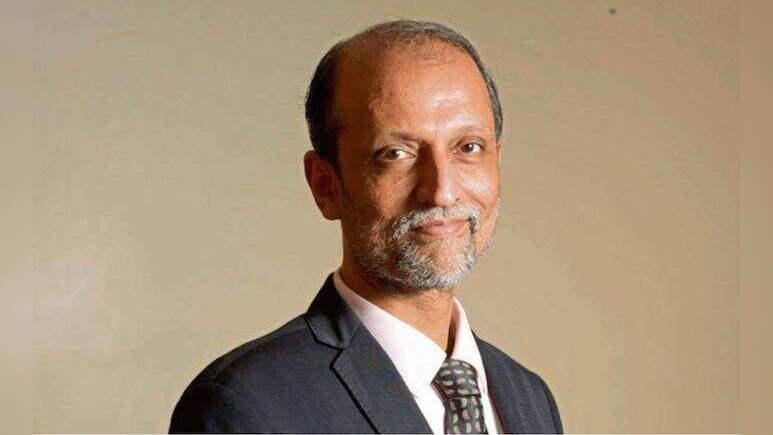
By Ajit Ranade
An Uber driver says he works longer hours than before, yet takes home less money. After fuel, maintenance, loan instalments and the platform’s deductions, little remains. His experience cannot establish how the entire economy is performing.


But he asks a reasonable question: if India is growing rapidly, why is making a living becoming harder? It brings to mind the title of Erma Bombeck’s book: If Life Is a Bowl of Cherries, What Am I Doing in the Pits?
If India is growing rapidly, why is making a living becoming harder? India’s GDP grew at 7.8% during the April–June quarter, which is impressive. The IMF, RBI and other agencies have revised growth estimates upwards for the whole year. Sustaining rapid growth amid international uncertainty is an achievement. This column is not about the controversy regarding the 7.8 number, which we can take as acceptable.
Does the disappointment therefore reflect excessive pessimism? Expectations rise with prosperity. Every expanding economy contains struggling businesses and disappointed job seekers. A few conversations cannot provide a representative assessment of a country as large and diverse as India. Yet the evidence of unease extends beyond anecdotes.
The RBI’s September urban consumer confidence survey recorded a Current Situation Index of 87.9, lowest since March 2023, below the neutral level of 100. About 54.5% of respondents believed the general economic situation had worsened over the preceding year, against 25.3% who thought it had improved.
Rural responses were also revealing. Only 20.6% reported higher income than a year earlier, while 30.5% reported a decline. Such findings give household discomfort a firmer basis than casual impressions or political commentary. There is however no sweeping pessimism in the RBI surveys. Urban households remained optimistic about the year ahead. Present dissatisfaction thus coexists with expectations of improvement.
Describing the economy as uniformly distressed would overlook this evidence. There is no necessary contradiction between rapid GDP growth and household anxiety. GDP measures production across the economy. It does not establish how widely additional income is distributed, whether employment is secure, or how much harder someone must work to maintain the same living standard. Suppose a millionaire enters a room.
Average wealth rises immediately, although nobody already there becomes richer. Even per capita GDP, which adjusts output for population, cannot reveal what has happened to the typical household. The composition of growth matters.
Capital-intensive activities and specialised services can generate substantial output and income while directly employing relatively few people. Corporate profits can rise much faster than wages, which has indeed happened.
Growth concentrated in these activities will feel different from an expansion that creates plentiful jobs across occupations and skill levels. Former RBI Governor Duvvuri Subbarao has drawn attention to precisely these structural concerns, including weak real rural wages and inadequate creation of good jobs.
They coexist with achievements in infrastructure, banking and digital payments. Recognising the achievements strengthens the case for examining where their benefi ts remain insufficient. It points to the fact that growth is not sufficiently inclusive.
Employment figures need careful study. Someone driving a cab, doing occasional construction work or helping on a family farm is now counted as employed. But it says little about earnings, volatility, predictable hours or protection against illness. Working fourteen hours instead of ten for the same income represents a deterioration that an employment count will miss.
Employment stats don’t capture precarity. Long queues for limited government vacancies reveal this problem. They reflect unemployment, but also the appeal of predictable salaries, benefits and security. Some applicants already have work. Their willingness to spend years preparing for recruitment examinations indicates how unattractive the available alternatives can be. Youth restlessness must be understood against this background.
Families have invested in education, often through considerable sacrifice. Qualifications raise expectations of economic mobility. When stable employment remains elusive, disappointment is understandable. Examination delays and paper leaks compound it. These experiences identify a gap between expanding production and the opportunities available to young people.
Household purchasing power provides another explanation. Families judge their circumstances through food bills, rent, school fees, healthcare expenses and trans port costs. Low inflation numbers do not reverse earlier price increases. If earnings have failed to keep pace with accumulated costs, even a period of moderate inflation offers limited comfort.
For farmers, local conditions can overwhelm national growth. Drought in Maharashtra threatens harvests and earnings while cultivation expenses and repayment obligations remain. Expansion in other sectors provides little immediate protection against a failed crop. The stock market adds another dimension. Foreign investors have relentlessly pulled out funds for the past two years, even as domestic investors invest systematically more than Rs 30,000 crore every month.
There is much talk of the government considering capital-gains tax relief because the index has given very poor returns. These poor returns have compounded poor wage growth. With retail participation having expanded, disappointing investment returns now affect the confidence of a wider section of the middle class.
Tax reductions are being discussed mainly to induce foreign investors to come back. Whether the tax cut happens or not, it suggests that the absence of financial comfort is being recognised within government. Large foreign withdrawals have meant that regular domestic investment did not lead to rising share prices.
The returns on India’s stock market have been affected by other factors too, such as rupee weakness and higher interest rates globally. The pessimism is compounded by stagnant wages, joblessness, rising inflation, rising household indebtedness, and deteriorating essential public services such as roads, schools and drinking water.
Better public healthcare, education and transport would improve living standards by reducing expenses families must meet privately. Growth of good quality jobs is anaemic. India’s growth performance warrants recognition.
The discomfort evident in household surveys also warrants attention. An economy can be resilient in aggregate while leaving many people financially insecure. Sustained growth creates the resources to address that insecurity.
Its success will become more widely felt when earnings, opportunities and everyday living conditions improve alongside national output. The writer is a noted economist.