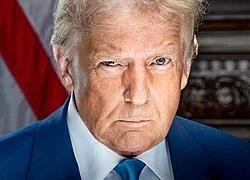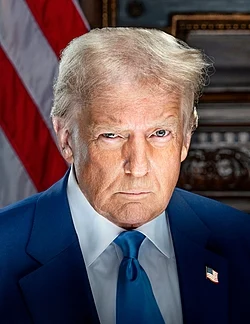
It is the fifth week running since US President Donald Trump and Israeli Prime Minister Benjamin Netanyahu launched the war against Iran. But till date no clear strategy and goal for the unprovoked and one-sided war have been defi ned.
The US is relentlessly continuing its strikes on Iranian civilian targets and building up forces in the region with the customary Trumpian equivocations about whether it wants a cease-fire leading to peace or total “obliteration” of Iran.
Also Read


This war, started by Trump and Netanyahu has, over this brief period of time, become the war of Iran and not war on Iran. The US President has clearly understood that this war is not an easy cake walk like Venezuela and that he has been trapped by Israel as Iran continues to launch missile and drone attacks on Israel and neighbouring Gulf states.
Making matters even worse, Tehran’s proxies in the region – the Houthis and Hezbollah – have joined the war in support of Iran. On the other hand, the virtual closure of the Strait of Hormuz has already shot up oil prices with cascading effects on the global economy – affecting fuel, fertiliser and supply chains. The shortage is increasingly assuming serious proportions in Asian factories and European diesel markets. Vague, contradictory and unconfirmed reports of talks on negotiations between Iran and the US on clinching a peace deal may be doing the rounds but there is no sign that the US is winning and Iran collapsing.
Obvious question could be who is the initiator of the talks. Trump’s bravado and false claims of destroying Iran notwithstanding, it appears the two sides are now engaged in a war of attrition, each hoping to wear the other down and force it to agree to a deal on its own terms. No wonder the USA is sticking to its 15-point peace deal and Iran to its five-point one. But neither seems to be willing to budge from their respective stand. At the same time each of the war-ringing nations is touting its successes and pointing to their opponent’s failures.
The truth is, however, buried in propaganda. And that is perpetuating the conflict. In the first place this war should never have been started for the simple reason that there was no immediate threat and the objectives are as clear as mud. In fact, the US began the war when negotiations on Iran’s nuclear programme were about to yield positive results. Only Trump and Netanyahu have to bear the responsibility for the bloodshed, loss of thousands of lives and destruction of homes and infrastructure. Trump continues to chase the mirage that he can force a regime change in Tehran.
At times, he says the entire Iranian leadership has been eliminated and then claims the new leadership is good enough, while the reality is the son of the killed supreme leader is now in charge and under him the country of Iran is perhaps growing even more hawkish. The conflicting statements of Trump tend to create the impression that he is caught in such a trap that he cannot escalate the war with a daily expense of over $1 billion and the possibility of heavy casualties in US ranks that would cause serious adverse reactions in his own country.
Nor can he stop this war which would cause a serious loss of face for him personally as also the US’ military prowess, but also put Iran in a position of strength that he never desired. Meanwhile, the foreign ministers of Egypt, Pakistan, Saudi Arabia and Turkey met in Islamabad on 29 March to work out a ceasefire agreement and also curb Israeli and Iranian dominance after the war.
The group’s first goal is to persuade all sides to stop the escalation and agree to a cease-fire, according to Gulf observers. They are also reportedly trying to convince Iran to allow some vessels to go through the Strait of Hormuz under the protection of a friendly country.
They can act as a primary interlocutor with Iran keeping indirect negotiating channels open between Tehran and Washington. In this there appears to be some progress. Without diplomacy or restraint, the economic crisis will deepen and US soldiers may be embroiled in a blood-letting reminiscent of the US war in Vietnam.