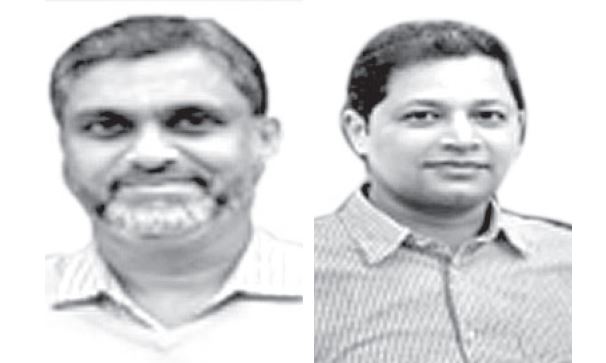
By DV Ramana & Sarada Prasanna Das
Tamil Nadu’s newly elected Chief Minister C Joseph Vijay began his first innings by announcing free electricity for household consumers. Whether this announcement is driven by electoral strategy or welfare concerns, only time will tell. However, such announcements travel quickly across state borders. No wonder, the citizens in Odisha started asking a simple question: if consumers elsewhere can receive free electricity, why not us, when we have surplus electricity? Moreover, during recent elections in Odisha, several parties made various promises related to welfare benefits, including free electricity.


Free power is a sensitive issue for households in Odisha as rising costs of food, education, healthcare, and transportation have already stretched monthly budgets for many families. Electricity is no longer a luxury, it is now a basic necessity.
Odisha was the first state to undertake power sector reforms in the 1990s. It unbundled its electricity board, corporatized it, invited private participation, and established an independent regulatory framework based on commercial principles. The underlying philosophy was clear: electricity is an economic good, and its pricing must reflect the cost of generation, transmission, and distribution.
After more than three decades of reforms, people of Odisha understand that electricity is not a free good. They know power plants must be paid, transmission involves cost, and distribution companies need financial stability to improve service quality. They also know that if tariffs are disconnected entirely from costs, the sector can quickly slide into financial distress.
However, recognizing electricity as an economic good does not mean all consumers must necessarily bear the burden directly. Odisha, as the pioneer of power sector reforms, now has an opportunity to create a model where “free power” and “market pricing” coexist.
The state should preserve the current mechanism of tariff determination. The OERC must continue to independently determine tariffs through public hearings, stakeholder consultations, and transparent cost assessments. This ensures that the real economic cost of electricity remains visible.
Let the Commission create a mechanism whereby the government can subsidize part of the tariff by directly reimbursing distribution companies. Such a system can also provide flexibility to gradually redesign state support for other sectoral initiatives over time. Transparent subsidy accounting can help the state better assess both the fiscal burden and the long-term effectiveness of different forms of support.
This model offers three important advantages. First, it preserves price signals. Consumers can still see the actual cost of the electricity they consume. This avoids the dangerous illusion that electricity is a “free good.”
Second, it ensures that subsidies remain transparent. Instead of forcing the distribution companies to absorb losses, the model makes the state government directly reimburse them, ensuring that they remain financially viable.
Third, it creates an opportunity for the state to rethink public support and gradually shift from consumption subsidies towards energy infrastructure such as rooftop solar and other energy systems, reducing the long-term subsidy burden.
The basic model of providing a subsidy to recover costs can be further improved with additional features.
Define the eligible households: Subsidy need not be universal. Support can be restricted to consumers with annual consumption below 1200 kWh so that relief reaches households that genuinely need assistance.
Make the tariff reflect the cost to serve: Retail tariffs should continue reflecting the real cost of supply, as envisaged under the Electricity Act, 2003. If household subsidies are funded directly by the government, the burden of cross-subsidization on High Tension (HT) and Extra High Tension (EHT) consumers can gradually decline. This would help Odisha’s industries, especially MSMEs, become more competitive by lowering electricity costs, attracting investment, and fostering employment generation.
Encourage voluntary surrender of subsidies: Consumers who choose not to avail the subsidy can be recognized publicly through appreciation letters or mentions in local newspapers.
Invest in long-term infrastructure: Alongside consumption subsidies, the state should provide infrastructure support such as rooftop solar, energy-efficient systems, and related infrastructure to ensure long-term sustainability.
Let Odisha lead the way once again: Odisha pioneered electricity reforms once. It now has an opportunity to pioneer the next generation of reforms by combining transparency, competitiveness, and compassion. Let consumers know the true cost of electricity, while governments transparently subsidize vulnerable households. Tariffs should reflect the true cost of service so that industries benefit from reduced cross-subsidization.
It is time for the state to take responsibility for maintaining the financial viability of the electricity sector while ensuring social equity.
DV Ramana is a Professor at XIMB while Sarada Prasanna Das is a Fellow at Sustainable Futures Collaborative, New Delhi