Angus Armstrong
If it is true that art imitates life, works of imagination can reflect underlying truths about our own experience. The English artist David Hockney, who died last month, certainly understood that. In reflecting on his brilliant and endlessly joyful work, even the most dismal-minded economist might learn something about how to interpret reality. Hockney saw that art comes not just from the mind but, more precisely, from memory. Like memory, art is always necessarily interpretative— never a perfect copy—and different artistic schools and movements reflect different ways of interpreting reality. Modernists, for example, consider the world to be generally knowable as a domain where structure is roughly stable and scientific discovery always leads to progress.
Also Read


Such a perspective is rather idealistic, relying on minimal principles to reveal an inherent order, as in Piet Mondrian’s mesmerizing abstract lines and blocks of bright colour. Modern macroeconomics is similar. On the basis of a few simple axioms about human decision-making and an assumption about how we form consistent expectations, economists have developed a grand theory of how the economic system works. With the right parameters, the thinking goes, we can study the workings of the economy with confidence that we have the right representation of reality. The validity of this approach goes back to 1954, when the discipline developed a formal proof of the existence of a perfect equilibrium under ideal economic conditions. This work elevated the profession to the “queen of the social sciences,” thanks to its quantitative rigour and application to related disciplines.
For policymakers, the message could not have been simpler: Fashion the world in the image of economists’ ideal conditions, and you can be free of messy normative or political judgments about the distribution of resources. Yes, reality is a bit more complicated, but complexities can be ironed out by using inflation targets and fiscal rules to head off any wandering expectations. We have now seen six British prime ministers in the past decade set out their economic strategies using almost exactly this framework. It has not gone particularly well, but we seem to be trapped in the same way of thinking. Hockney had a different sense of reality. Eschewing the idea of a single truth, he showed that the world unfolds before us in ways we cannot fully understand. We have different perspectives on reality, which is itself indeterminate. The actual economy is not some isolated knowable system of causal relations that are occasionally perturbed by an external shock.
Economist Armen Alchian reminded us long ago that our axioms are not a description of human behaviour and decision-making processes, only a simplification. Yet uncertainty need not leave us paralyzed. On the contrary, Frank Knight suggested a century ago that intelligent life probably would not even exist without uncertainty, and George Shackle maintained that living with uncertainty is the price we pay for having an imagination. We don’t just rationally choose between existing products. We create knowledge for ourselves by seeking to harness the inherent uncertainty of experience. We all must plan ahead. But if the future cannot be known, the question is how we approach forecasting.
Former US Federal Reserve Chair Ben Bernanke recommended that the Bank of England consider “alternative modeling frameworks,” even heterodox models. This is consistent with Hockney’s insight. If economic forecasting is to be a useful practice, it must account for different perspectives. If economists were to reduce the weight on equilibrium models, we could then explore other potential outcomes. Doing so might call our attention to parameter values where dynamics change, causing cascades of economic activi ty (or tipping points) that are much more important for decision-makers to be aware of. It may well reveal areas where the economy is developing serious problems—a truly worthy contribution to the debate.
Since a single model tells only a single story, those who cling to it can easily end up trapped in TINA (there is no alternative) thinking—as British prime ministers have done. The only logical response is to use alternative models. When these contradict one another, we can still make decisions on the basis of John Maynard Keynes’ “balance of evidence,” rather than sticking to the pretense of knowledge. Even in the messier world of fiscal policy, we continue to estimate the precise long-term impact of public investment by using a very conventional production function.
Alfred Marshall may have established organisation as a fourth factor of production, but since such functions ignore any change in organisations, alternatives are never considered. Robert Solow was right to caution that production functions are only illuminating parables. Accepting radical uncertainty means accepting that knowledge is always fallible and incomplete, even with all the information that could possibly be gathered. This distinction will matter more and more as we deploy AI. Corporate board members still will need to “feel” satisfied—rather than simply being told—that all reasonable eventualities have been considered. That requires human involvement and knowing where outputs come from. We will eventually follow Hockney’s footsteps into a world of postmodern macroeconomics, with uncertainty at its core, rather than an exogenous shock to an otherwise stable equilibrium. This economics will invite different perspectives and experimentation, and different institutions will support the creation of new knowledge. Our challenge will be to find the right structures and to make way for a world in which crude utilitarianism gives way to justice, dignity, and fairness—values to which Hockney was deeply committed.
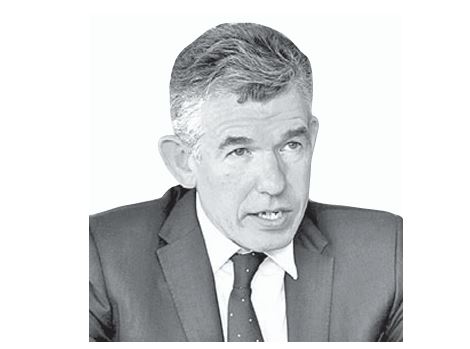
The writer is a research professor at the Institute for Global Prosperity at University College London and Chief Economic Adviser at Lloyds Banking Group.
Orissa POST – Odisha’s No.1 English Daily