Odisha News, Odisha Latest news, Odisha Daily - OrissaPOST
  • Home
  • Trending
  • State
  • Metro
  • National
  • International
  • Business
  • Feature
  • Entertainment
  • Sports
  • More..
    • Odisha Special
    • Editorial
    • Opinion
    • Careers
    • Sci-Tech
    • Timeout
    • Horoscope
    • Today’s Pic
  • Video
  • Epaper
  • News in Odia
  • Home
  • Trending
  • State
  • Metro
  • National
  • International
  • Business
  • Feature
  • Entertainment
  • Sports
  • More..
    • Odisha Special
    • Editorial
    • Opinion
    • Careers
    • Sci-Tech
    • Timeout
    • Horoscope
    • Today’s Pic
  • Video
  • Epaper
  • News in Odia
No Result
View All Result
OrissaPOST - Odisha Latest news, English Daily -
No Result
View All Result

Splitting the atom, cutting the carbon

Updated: September 25th, 2026, 08:15 IST
in Opinion
0
Share on FacebookShare on TwitterShare on WhatsAppShare on Linkedin

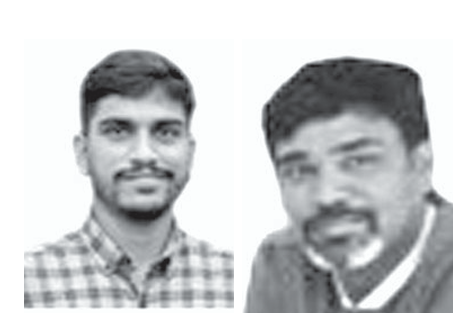
By Ansuman Das & Pranaya Kumar Swain

For decades, nuclear energy sat uneasily at the margins of the climate debate: valued for its low emissions, distrusted for its cost and history of accidents. That is changing, as demand rises and countries race to decarbonise power systems, pulling nuclear back to the centre of the conversation, not as a relic of Cold War science, but as a tool for a warming planet.
Also Read

Malay Mishra

End of the Road

1 day ago
Nikhilanand Panigrahy

A physics formula on a tombstone

1 day ago

Nuclear power supplies roughly a tenth of global electricity, and remains the world’s second-largest source of low-carbon electricity after hydropower. More than 400 reactors operate across 31 countries, with fresh construction concentrated in Asia. Its value lies in generating large volumes of low-emission electricity independently of weather, increasingly useful as grids lean more on variable renewables. France draws most of its power from reactors; Slovakia, Hungary and Ukraine also lean heavily on nuclear. Japan, meanwhile, has been restarting reactors after its post-Fukushima shutdown, proving a major accident need not eliminate nuclear from a mix.

India’s story is more distinctive. Nuclear contributes only about 3.1% of India’s electricity, from an installed capacity of 8.78 GW, against a government target of 100 GW by 2047, a huge acceleration shaped by decades of technology restrictions following India’s nuclear tests and its position outside the Non-Proliferation Treaty, which pushed the country toward self-reliance and its three-stage programme, including exploiting its thorium reserves.

The 2008 India-US civil nuclear deal reopened access to global commerce, but India’s liability regime continued to unsettle suppliers. That is the context for the SHANTI Act, 2025, which restructures India’s nuclear laws: permitting private participation in select activities under licensing, while keeping enrichment, spent-fuel management and heavy-water production under central control, and replacing the single liability cap with a graded framework.

Alongside it, the Nuclear Energy Mission allocates 20,000 crore for small modular reactors, with at least five indigenous units targeted by 2033.

Technology and finance are only part of the challenge; nuclear power depends on public trust. Chernobyl and Fukushima keep radiation risk vivid in public memory. India’s programme has emphasised safety assessments and post-Fukushima upgrades, but reassurance must be built through independent, transparent institutions and timely disclosure. Scaling to 100 GW will demand a far larger ecosystem of regulators and skilled workers, and a shortage of nuclear talent is already a concern.

The climate case for nuclear is straightforward but shouldn’t be overstated: it is low-carbon, energy-dense and capable of round-the-clock generation, valuable because solar and wind output varies with weather. That makes it a complement to renewables, not a substitute. Its economics are harder, with long build times and common cost overruns, so the real question is whether a diversified system including it can deliver reliability and deep decarbonisation at acceptable cost.

India needs enormous additional electricity as incomes rise and industry, transport and buildings electrify, even as it pursues net-zero by 2070. As of July 2026, India had crossed 300 GW of installed non-fossil capacity, of which nuclear supplies just 8.78 GW, so the 100-GW target is best read as an addition to that build-out, not a retreat.

Financing, manpower, waste management, liability and public confidence remain formidable obstacles. India’s approach is especially consequential because it combines rapid expansion, self-reliance and a controlled opening to private capital, rarely pursued together at this scale.

If it can build faster without compromising safety, and sustain public trust through genuine transparency, it could show that nuclear has a real role in a large developing economy’s energy transition. If it fails, the reasons will likely be familiar: cost overruns, delays and weak public confidence.

Either way, nuclear no longer needs to ask whether it belongs in the climate conversation, the question now is how much of it gets built, how quickly, and how safely.

Ansuman Das is a Department of Atomic Energy Fellow, Pranaya Kumar Swain is Professor, School of Humanities and Social Sciences at National Institute of Science Education and Research (NISER), Bhubaneswar.


Orissa POST – Odisha’s No.1 English Daily
ShareTweetSendShare
Suggest A Correction

Enter your email to get our daily news in your inbox.


OrissaPOST epaper Sunday POST OrissaPOST epaper

Click Here: Plastic Free Odisha

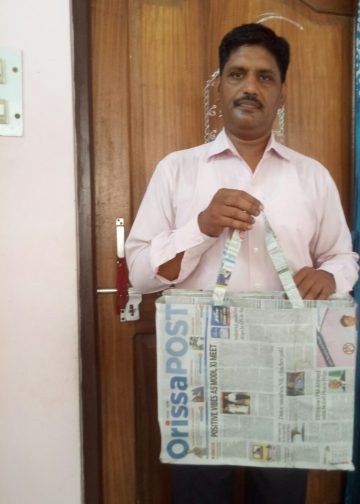
#MyPaperBagChallenge

Adyasha Priyadarsani Sendha

December 12, 2019
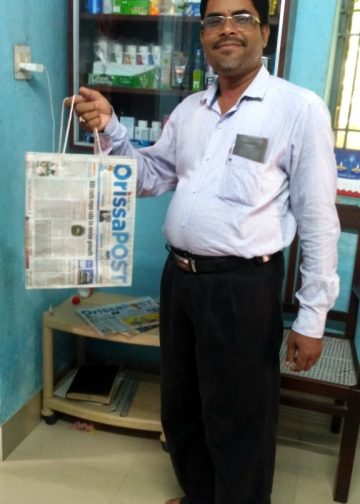
#MyPaperBagChallenge

Mrutyunjaya Behera

December 12, 2019
#MyPaperBagChallenge

Debasis Mohanty

December 12, 2019
#MyPaperBagChallenge

Sisirkumar Maharana

December 12, 2019
#MyPaperBagChallenge

Tapaswini Mallick

December 12, 2019
#MyPaperBagChallenge

Ramakanta Sahoo

December 12, 2019
#MyPaperBagChallenge

Sarmistha Nayak

December 12, 2019
#MyPaperBagChallenge

Anasuya Sahoo

December 12, 2019
#MyPaperBagChallenge

Pratik Kumar Ghibela

December 12, 2019
#MyPaperBagChallenge

Subhajyoti Mohanty

December 12, 2019
#MyPaperBagChallenge

Spinoj Pattnaik

December 12, 2019
#MyPaperBagChallenge

Shreyanshu Bal

December 12, 2019
#MyPaperBagChallenge

Matrumangal Jena

December 12, 2019
#MyPaperBagChallenge

Adweeti Bhattacharya

December 12, 2019
#MyPaperBagChallenge

Jhili Jena

December 12, 2019
#MyPaperBagChallenge

Sarfraz Ahmad

December 12, 2019
#MyPaperBagChallenge

Manas Samanta

December 12, 2019
#MyPaperBagChallenge

Sibarama Khotei

December 12, 2019
#MyPaperBagChallenge

Pitabas Tripathy

December 12, 2019
#MyPaperBagChallenge

Anshuman Sahoo

December 12, 2019
#MyPaperBagChallenge

Ankita Balabantray

December 12, 2019
#MyPaperBagChallenge

Bijswajit Pradhan

December 12, 2019
#MyPaperBagChallenge

Keshab Chandra Rout

December 12, 2019
#MyPaperBagChallenge

Saishree Satyarupa

December 12, 2019
#MyPaperBagChallenge

Subhajyoti Mohanty

December 12, 2019
#MyPaperBagChallenge

Pragyan Priyambada

December 12, 2019
?????????????????????????????????????????????????????????????????????????????????????????????????????????????????????????????????
#MyPaperBagChallenge

Dibya Ranjan Das

December 12, 2019
#MyPaperBagChallenge

Rajashree Manasa Mohanty

December 12, 2019
#MyPaperBagChallenge

Tabish Maaz

December 12, 2019
#MyPaperBagChallenge

Ipsita

December 12, 2019

Archives

Editorial

Let them Bloom

September 23, 2026

The alleged suicide by a second-year B. Tech student of the prestigious IIT Bombay, one of India’s most premier institutes,...

Read moreDetails

Pappu Changes Side

Leader of Opposition in the Lok Sabha Rahul Gandhi with comedian Pulkit Mani during the 'Chhatron ki Goonj' event, in Indore, Madhya Pradesh. (PTI)
September 22, 2026

Political satire, which in the present social media age also assumes the form of memes, is a healthy process of...

Read moreDetails

Back to Cash

Election Commission of India
September 21, 2026

Almost ten years ago on 8 November 2016 when PM Narendra Modi personally, in a highly insensitive and arbitrary manner,...

Read moreDetails

An Arch, A Legacy

September 20, 2026

By Aakar Patel Work on Donald Trump’s arch begins in Washington, DC, this month. Fashioned on Paris’s Arc de Triomphe,...

Read moreDetails
  • Home
  • State
  • Metro
  • National
  • International
  • Business
  • Editorial
  • Opinion
  • Sports
  • About Us
  • Advertise
  • Contact Us
  • Jobs
Developed By Ratna Technology

© 2025 All rights Reserved by OrissaPOST

  • News in Odia
  • Orissa POST Epaper
  • Video
  • Home
  • Trending
  • Metro
  • State
  • Odisha Special
  • National
  • International
  • Sports
  • Business
  • Editorial
  • Entertainment
  • Horoscope
  • Careers
  • Feature
  • Today’s Pic
  • Opinion
  • Sci-Tech
  • About Us
  • Contact Us
  • Jobs

© 2025 All rights Reserved by OrissaPOST

    • News in Odia
    • Orissa POST Epaper
    • Video
    • Home
    • Trending
    • Metro
    • State
    • Odisha Special
    • National
    • International
    • Sports
    • Business
    • Editorial
    • Entertainment
    • Horoscope
    • Careers
    • Feature
    • Today’s Pic
    • Opinion
    • Sci-Tech
    • About Us
    • Contact Us
    • Jobs

    © 2025 All rights Reserved by OrissaPOST