
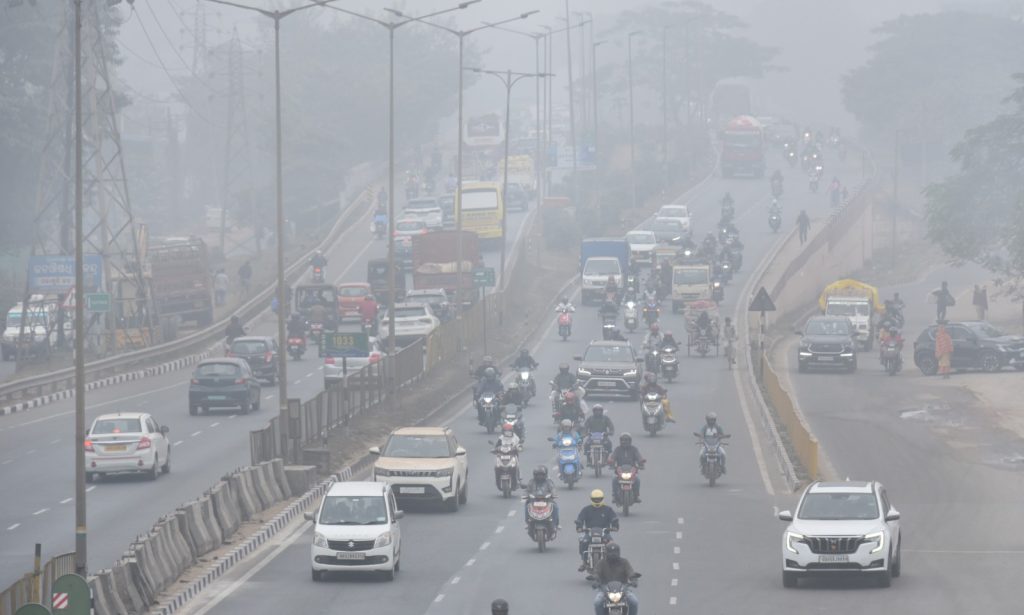
Bhubaneswar: Rising air pollution is rapidly emerging as a serious public health concern across several urban centres in Odisha, with cities such as Bhubaneswar, Balasore, Rourkela, Paradip, Talcher, Barbil and Kalinga Nagar recording a steady decline in air quality, experts warned at a recent seminar organised by the Orissa Environmental Society (OES) in Bhubaneswar on the theme, “How safe is the air that we breathe today: An overview of air pollution as a silent killer.”
Addressing the gathering, CSIR–IMMT chief scientist Trupti Das said air pollution is increasingly causing health emergencies in urban India, including Odisha, citing industrial emissions, vehicular exhaust, construction activities, and the burning of solid waste and crop stubble as major sources, and noting that air quality typically worsens during the winter months across the state and the country.
Referring to the State of Global Air (SoGA) 2024 report by the US-based Health Effects Institute (HEI), Das said air pollution remains a leading cause of premature deaths in India, with 464 children under five dying daily and a total of 21 lakh deaths across all age groups in 2021. OES secretary Manoranjan Mishra, in his address, pointed out that rapid urbanisation and changing lifestyles have led to a sharp increase in motor vehicles on City roads.
He cautioned that fine particulate matter generated from vehicle tyres poses serious health risks. OES president SN Patro noted that nearly 40 per cent of greenhouse gas emissions originate from residential households, largely due to extensive use of electronic gadgets and air conditioners. Working president of OES JK Panigrahi suggested that CSIR-IMMT should consider undertaking a pilot project in collaboration with the Bhubaneswar Municipal Corporation to assess air quality and suggest improvement measures for the Capital city and nearby regions.
Participants in the seminar stressed the urgent need for remedial steps to control air pollution. They advocated the adoption of Lifestyle for Environment (LiFE)—an eco-friendly way of living—as a sustainable solution to reduce pollution and improve public health. Emphasis was also laid on transitioning to energy-efficient non-fossil fuels, dust suppression measures, development of green belts with broad-leaved tree species, and promotion of organic food.
The seminar was presided over by OES vice president Lala AK Singh. CSK Mishra introduced the guest speaker, while joint secretary Surabhi Jain delivered the vote of thanks. Several eminent personalities including Seba Mahapatra, BS Patro, Suresh Moharana, Rekha Das and Sarat Chandra Mishra, attended and actively participated in the deliberations.