


Bhubaneswar: In a push to the state’s Blue Economy initiatives, the Odisha government Wednesday approved a proposal for the enactment of a new legislation to establish a robust, modern, and inclusive legal framework for the growth of the marine fisheries sector.
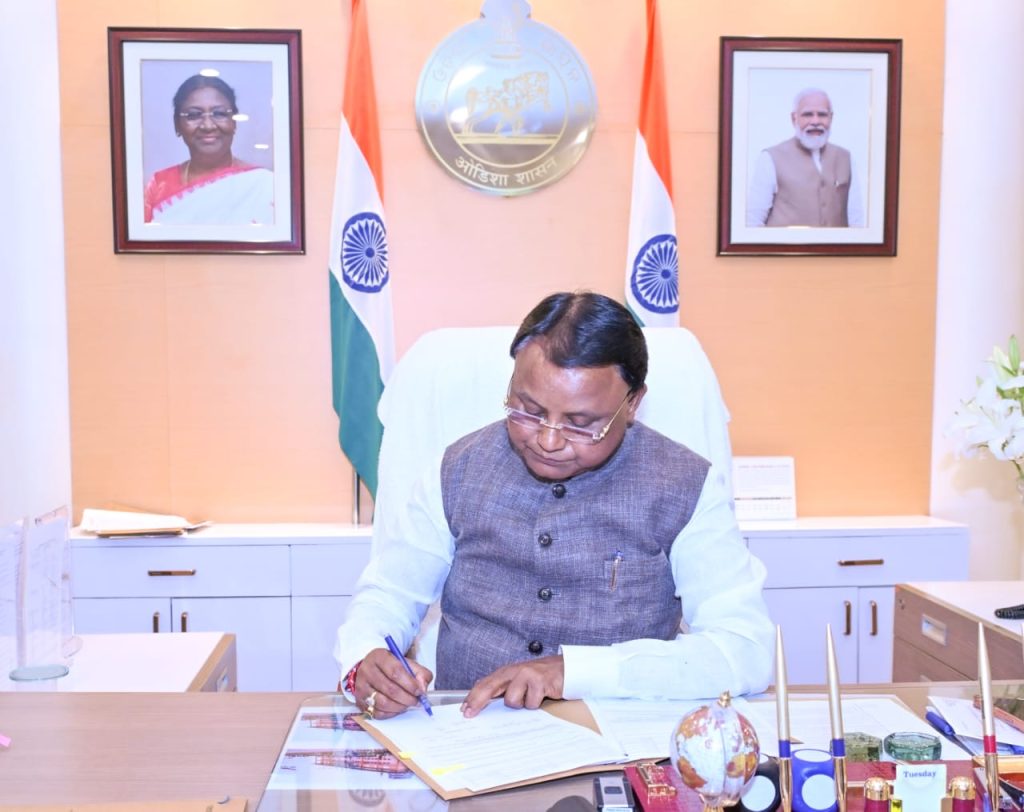
The approval was made at the Cabinet meeting chaired by Chief Minister Mohan Charan Majhi.
As many as 10 proposals spanning seven key departments were approved, Chief Secretary Anu Garg told reporters after the meeting.
Garg said that the cabinet has approved the memorandum of the Odisha Marine Fishing Regulation Bill, 2026, after repealing the Odisha Marine Fishing Regulation Act, 1982.
The earlier Act was limited in scope, not inclusive, and inadequate to address emerging challenges such as marine resource conservation, fishermen’s safety, coastal security, technological advancements, and the prevention of unauthorised entry of foreign fishing vessels, Garg said.
The new legislation, on the other hand, overcomes certain limitations by expanding the scope to include the regulation of deep-sea fishing and the promotion of mariculture activities, such as marine cage culture, seaweed culture, deployment of artificial reefs for rejuvenation of territorial waters and several other ventures for sustainable development.
Apart from this, the proposed legislation paves the way for comprehensive smart green integrated infrastructure development, including the modernisation and management of fishing harbours and fish landing centres along the coast of Odisha, she said.
The new bill will ensure livelihood support as well as employment generation. A high priority has been given in the new bill to the safety of our coastal communities and coastal & national security, the chief secretary said.
The proposed legislation mandates the use of modern safety equipment and communication technologies, including transponders, Very High Frequency (VHF) radios, and Vessel Tracking and Monitoring Systems (VTMS).
These provisions, along with mandatory biometric QR-coded Aadhaar identification and enhanced insurance coverage, will significantly bolster fishermen’s security and coastal surveillance, she noted.
The new legislation also introduces stringent measures to curb illegal, unreported, and unregulated (IUU) fishing activities.
It provides for the strict regulation of fishing vessels, fishermen, and related activities, along with provisions for licensing, fishing gear regulation, and the prohibition of destructive fishing practices, Garg said.
The target is a monumental milestone of Rs 25,000 crore seafood export by 2036, Garg said.
In another major decision, the Cabinet accorded its approval to the establishment of the Directorate of Archaeology for better management and preservation of ancient temples and monuments across Odisha.
The state government has formulated the Odisha Archaeological Curator Service (Method of Recruitment and Conditions of Service) Rules, 2026, after due consultation with the Law and Finance Departments, the chief secretary said.
The dedicated Directorate will play a key role in systematic conservation of archaeological sites, promotion of research activities, and wider publicity of Odisha’s glorious cultural heritage, she said.
The Cabinet also approved the repeal of the Odisha High Speed Diesel (Dealers’ Licensing) Order, 1979 through a new notification.
This decision is expected to simplify regulatory procedures, facilitate ease of doing business, and promote a more liberalised regime in the petroleum sector, Garg said.
The Cabinet also approved a revised cost of Rs 854.24 crore for setting up a 40022033 kV Grid Sub-station at Paradeep and associated transmission lines for power supply to the upcoming industries in the Petroleum, Chemical and Petrochemicals Investment Region (PCPIR) in Paradeep & Kendrapada. The initial project cost was Rs 637.45 crore.
Garg also said that the Cabinet okayed a proposal to repeal 358 Acts of the State Legislature enacted between 1974 and 2025 as they have become redundant and obsolete.