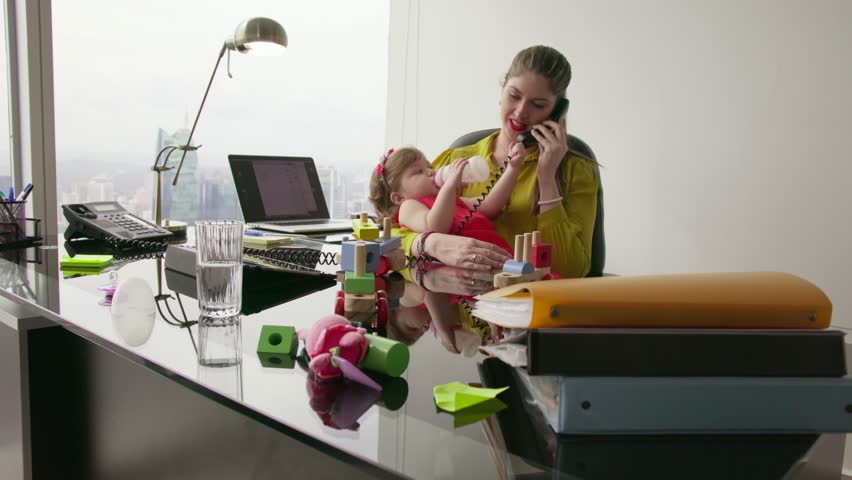
You are back from work and about to retire for the day and suddenly your phone starts ringing. You see your boss’s name flashing on your phone screen. It’s a call you simply can’t ignore, irrespective of how important the message it.
Answering your boss’s call or responding to e-mails at home after slogging all day at office can at times get irritating. But employees can now breathe easy. The Right to Disconnect Bill 2018, a Private Member’s Bill, which was introduced by NCP MP Supriya Sule in Lok Sabha recently, comes with the objective of helping employees strike a better work-life balance and reduce stress.
The Bill, if passed, will give employees the right to not respond to calls or communicate with his employers after office hours. As per Sule, who represents Baramati constituency in Lok Sabha, the Right to Disconnect Bill aims at “reducing stress and ease tension between an employee’s personal and professional life.” Orissa POST spoke to a few young employees to seek their views on the proposed Bill.
Ipsita Mishra, a HR personnel with a Bhubaneswar-based private company, says, “I have been working for four years and feel that there can’t be anything worse than a phone call from the boss on your holiday. The Right to Disconnect Bill hopefully will put an end to this problem. At least we can maintain a proper work-life balance.
Ipsita feels that her office hours are still not over even after returning home. “Even if I am idling at home after work, every time my phone beeps, I become cautious thinking it’s from my seniors. Although it’s not always from them, there’s always a nervous feeling. This often leads to anxiety and unsound sleep. This also shakes my confidence and I start thinking that how much I work, I will never be able to satisfy my seniors,” complains Ipsita.
Banita Palia, who works at a Bangalore-based advertising agency, echoes Ipsita’s sentiments. “One must understand that every employee has a family and he/she wants to spend quality time with them after giving eight hours to office,” says Banita.
Among other countries France is the only one to have implemented this law in 2017. “In countries like India, employees are expected to be available 24X7. If an employee fails to answer calls or reply to office mails he has to face the employer’s wrath the next morning. The scenario was different till Internet and mobile phones came to our lives. Today, it has become easy for employers to get in touch with employees and get the work done simply by ordering them over phone at any hour. I must appreciate the MP who thought about the wellbeing of employees,” she adds.
Understandably, employees wish that the Bill gets passed given that no one wants to take work back home. Baldev Prasad, a Jharsuguda-based civil engineer, says, “We all want to fly like a bird. But that’s not possible. We work to support our families. One enjoys his work only till he doesn’t feel the pressure or his life will be like a caged bird. If our seniors have the liberty to enjoy life after work, why can’t we? After all, employees are behind the success of any organisation and employers should realise this.
However, Baldev also informs that he doesn’t take calls from his seniors after work, as he is confident that even if he loses his job, he will get one the next day. But not everyone is as lucky as Baldev. Software professional Disha Tripathy says, “Work-life balance is an important aspect of corporate culture and everyone should get the privilege of not taking calls from his employers after work. However, most people can’t ignore their boss’s call. The Bill definitely is a step in the right direction. IT professionals will understand it better given that they at times work for 12-13 hours,” says Disha.
Rashmi Rekha Das, OP