
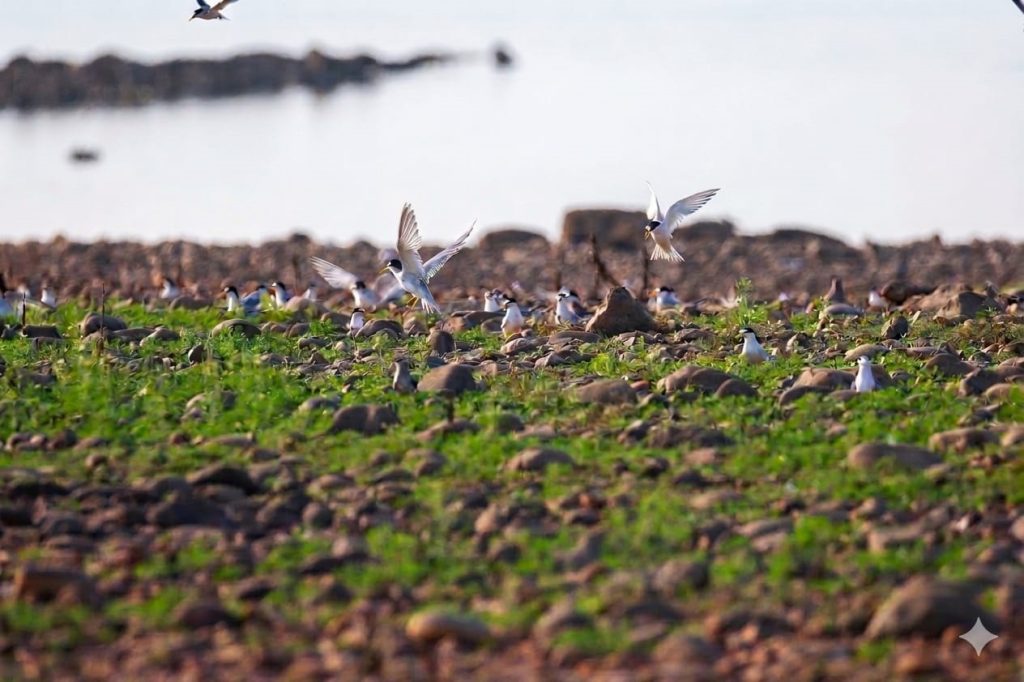
Bhubaneswar/Sambalpur: The Hirakud wetland, one of India’s internationally recognised Ramsar sites, has recorded a significant increase in summer bird nesting activity in 2026, underscoring the success of sustained conservation efforts and the improving ecological health of the wetland ecosystem.
According to a recent assessment conducted in June 2026, a total of 19 bird species were found nesting across the wetland and adjoining habitats, compared to just 10 species recorded during the first systematic summer nesting survey in 2025. The breeding colonies have also expanded geographically, with nesting activity documented on 28 islands this year, up from 26 islands last year.
Notably, Tupa Dungri and Bhalu Dunguri islands recorded nesting for the first time. The encouraging trend follows another major milestone for the wetland. During the annual mid-winter waterfowl census conducted in January 2026, officials recorded 4,21,763 birds belonging to 128 species, a substantial increase from 3,77,732 birds of 122 species in 2025.
The wetland has witnessed a steady rise in bird numbers over recent years, with around 3.4 lakh birds recorded in 2024 and 3.16 lakh in 2023, establishing Hirakud as one of eastern India’s most important avian habitats. Wildlife experts attribute the rise in summer nesting to improved habitat conditions and effective protection measures.
Interestingly, some winter migratory bird species remained in the wetland during the summer months instead of undertaking their usual return migration, contributing to enhanced breeding activity. Among the species recorded nesting this year are Little Tern, River Tern, Gull-billed Tern, Small Pratincole, Oriental Pratincole, Red-wattled Lapwing, Yellow-wattled Lapwing, Indian Skimmer, Little Ringed Plover, Greater Painted Snipe, Spot-billed Duck, Lesser Whistling Duck, Painted Stork, Asian Openbill, Black-winged Stilt, Black-headed Ibis, Red-naped Ibis, Glossy Ibis and Indian Thick-knee.
DFO Hirakud Wildlife Division, Anshu Pragyan Das said, “A series of conservation interventions have played a crucial role in supporting the breeding season. Natural nesting habitats comprising reed beds, grasslands, shrubs and trees were protected, while activities causing disturbance, such as vegetation cutting around breeding sites, were discouraged. To minimise disturbance, fishing activities around all 28 nesting islands have remained restricted since mid-April.
Seasonal no-entry zones were enforced around breeding colonies for fishermen and patrol boats. Authorities also undertook measures to manage feral dogs and remove invasive plant species that threaten the wetland’s ecological balance. Forest officials have further strengthened protection through round-the-clock monitoring of breeding colonies, regular island surveys and assessment of fledgling success.
A “Zero Summer Fire” initiative, involving the creation of fire lines around reed beds and grasslands, has helped prevent habitat loss and safeguard critical nesting areas. The breeding season, which began in mid-April, is expected to continue until the end of July.