
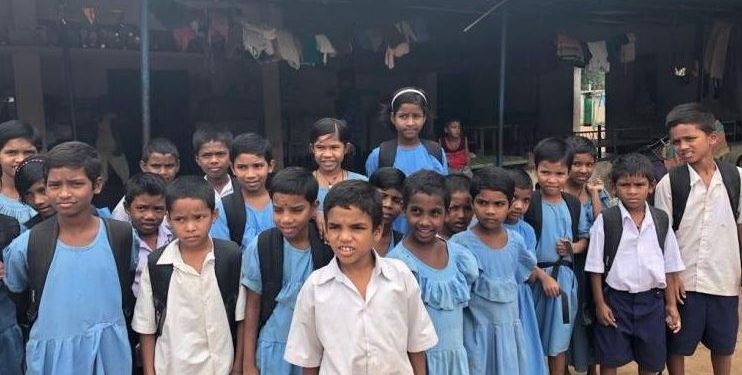
Nabarangpur: The dropout rate in Nabarangpur district is emerging as a serious concern, with an increasing number of students leaving school midway through their education.
The trend, visible from primary to secondary levels, has alarmed both the School and the Mass Education Department and social organisations.
In the recent session of the state Assembly, Balasore Sadar MLA Manas Kumar Dutta sought details from state School and Mass Education Minister Nityananda Gond regarding dropout figures in the state over the past five years.
Data presented by the minister indicate that among the four districts of the undivided Koraput region, Nabarangpur’s dropout rate is particularly worrying.
At the primary level, Nabarangpur records a dropout rate of 1.73 per cent, including 2.01 per cent among girls and 1.45 per cent among boys.
The rate rises sharply at the upper primary level to 10.57per cent, with 10.91 per cent for girls and 10.25 per cent for boys, indicating a significant jump as students transition from primary to upper primary classes.
At the secondary level, the dropout rate climbs further, almost doubling to 19.55 per cent, comprising 20.83 per cent among girls and 18.39 per cent among boys.
In comparison, primary-level dropout rates stand at 1.90 per cent in Koraput district, 3.16 per cent in Malkangiri district and 2.46 per cent in Rayagada district.
At the upper primary level, the rates are 4.96per cent in Koraput, 2.99 per cent in Malkangiri and 4.25per cent in Rayagada.
The figures highlight a consistent rise in dropout rates as students progress to higher classes in Nabarangpur, underscoring the need for urgent intervention.
The dropout rate at the secondary or high school level stands at 19.55per cent in Nabarangpur district, 16.19 per cent in Koraput district, 13.10 per cent in Malkangiri district and 15.58 per cent in Rayagada district, according to official data.
Financial hardship, child labour, family responsibilities and lack of parental awareness are cited as the primary reasons for the rising dropout rate.
Early marriage among adolescent girls has also contributed significantly to the discontinuation of education.
Although the government has introduced several schemes such as the mid-day meal programme, free textbooks, uniforms, bicycles and scholarships, there are allegations that these measures are not being implemented effectively.
The increasing number of dropouts is seen as a worrying trend. Experts warn that it could lead to higher levels of illiteracy, unemployment and social inequality.
They stress the need for coordinated action by the government, the education department and parents to address the issue.
In the current scenario, emphasis on quality education, regular counselling for students and awareness programmes for parents has become essential.
Observers caution that unless firm policies and concrete steps are taken to curb dropout rates, the education system could face a deeper crisis.
To encourage students to return to school, the government is also providing incentives and stipends. Special initiatives to promote girls’ education in the KBK region include Kasturba Gandhi residential schools as well as ashram and sevashram schools run by the Scheduled Caste and Scheduled Tribe Department.
Despite these measures, the dropout rate shows little sign of decline, causing concern among educationists and policymakers.