
India is approaching a moment of historic significance for both national defence and the nation’s overall quality of life and economic well-being. Nearly 10,000 schoolchildren are close to reaching the critical threshold required to generate a powerful global field effect of national coherence and social order through the large group practice of Transcendental Meditation and the advanced TM-Sidhis program. Their efforts represent one of the most remarkable humanitarian achievements in modern history. These individuals are helping to establish a human resource-based defence system grounded in decades of peer-reviewed research and validated by military field tests. Together, they show that a more peaceful world can be created when these brain-based technologies are practised regularly in large groups. Since civilian groups and school children cannot sustain a continuous national defence posture, it becomes clear that this responsibility belongs to the professional armed forces of India. Their mission is to safeguard the nation around the clock, every day of the year. Given this mandate, the Indian defence community would be wise to take the lead in deploying what many military experts are calling Invincible Defence Technology (IDT).
IDT is a brain-based military defence system which has been field-tested and validated by experience. It is a non-religious practice, scientifically validated and available for immediate application by all branches of the Armed Forces of India. Research published in the Journal of Offender Rehabilitation reports that during periods when large assemblies of IDT experts are active, global terrorism drops by 72% and international conflict decreases by 32%.
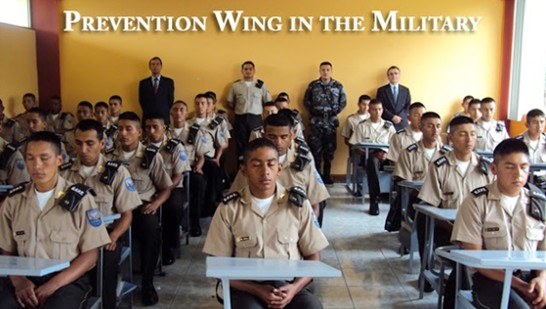
Research published in the Journal of Conflict Resolution reports that decreases in societal stress are associated with reductions in hostility and violence, and the authors propose that lowered social stress serves as the mechanism linking group practice to these outcomes. Military field-tests have demonstrated IDT effectiveness many times over. The armed forces of Mozambique conducted their IDT deployment in the early 1990s, and Ecuador’s military carried out its own successful implementation in mid-1995. Both nations reported unprecedented positive outcomes, including ending civil violence and establishing and maintaining peace and prosperity for those nations, when IDT units were active in the preventative wings of their militaries.
Mozambique, in particular, went from being the poorest country in the world to becoming an African economic superstar, starting at the time of IDT intervention. Its 15-year-old civil war ended, its decade of prolonged drought ended, and President Joaquim Alberto Chissano was honoured with Mo Ibrahim Prize for Achievement in African Leadership in 2007.
In 1978 a demonstration project sent 1400 IDT experts to five global trouble spots, including Lebanon, Iran, Rhodesia, Kampuchea, and Nicaragua. Even with this small number, hostilities decreased by 17% and cooperation increased by 13%, as reported by Orme-John’s son and colleagues.
During the Lebanese civil war (1983 to 1985), IDT assemblies in Israel, mounted for the purpose of demonstration and research, were associated with a dramatic 45% decrease in war intensity. A second follow-up study by Davies and Alexander found a 66% boost in cooperation between antagonists in that war during the periods of IDT implementation by civilian participants.
IDT is held to operate at the level of the unified field of all the laws of nature. The unified field described in modern physics is one thousand million million times (10¹) more powerful than the nuclear force, yet IDT does not harness this power for destruction. Instead, it uses this deeper level of natural law to create social order and coherence by reducing societal stress and generating a peace-promoting influence that strengthens national security without harming anyone. Any nation that understands this strategic reality will recognise that IDT represents not only the most advanced and humane defence capability available today, but also the path to permanent world peace.
Pakistan’s defence and academic communities are aware of the emerging IDT developments in India as well as in other countries. The peer-reviewed paper “A New Role for the Military: Preventing Enemies from Arising – Reviving an Ancient Approach to Peace” was published in 2009 by Pakistan’s Journal of Management & Social Sciences, demonstrating that the concept has already entered Pakistan’s strategic discourse. With this level of awareness, it is only a matter of time before Pakistan’s military begins developing a fully operational IDT capability of its own. India’s armed forces must recognise this reality and act with the urgency required to ensure that India leads, rather than follows, in the global deployment of unified field-based defence.
India’s defence community is not unaware of this research discussed in these publications. Numerous Indian defence publications (and many other international outlets) have examined IDT’s strategic potential. Indian Defence Review (IDR) and DSA (Defence and Security Alert) have also published speculative analyses exploring how IDT units could be deployed near high-risk regions such as the coasts of North Korea to reduce the probability of nuclear escalation.
Prime Minister Narendra Modi has repeatedly emphasised India’s growing leadership role in promoting global peace and harmony. This vision aligns directly with the deployment of IDT. Thus, the responsibility for maintaining a large, stable, and continuous IDT group cannot rest solely on civilians. Ideally, a group of 10,000 must be maintained without interruption to achieve a global effect. Only the military and paramilitary forces have the structure, discipline, and continuity to ensure that such a group remains active every day of the year. Military personnel rotate through leave schedules, but the institution itself never sleeps; it is always on duty. This is why logic demands that the military take responsibility for deploying and sustaining the peace-promoting technology of IDT.
The students in the 10,000 Assemblies have demonstrated extraordinary foresight, intelligence, courage and commitment. They have shown the world what is possible. They have brought India to the brink of a new era in defence strategy. They deserve honour and gratitude. But they should not be asked to carry the full weight of national security. That responsibility belongs to the armed forces.
India now has an opportunity to lead the world into a new era of creating peace. The technology is ready. The research is detailed. The global need is urgent. The only remaining question is whether India’s military leadership will act with the resolve required to protect their nation, start the transition to lasting peace, and fulfil the promise of IDT. The time to assume that responsibility is now.
Maj. Gen. Kulwant Singh has led an international group of generals and defense experts that advocate IDT. David R. Leffler is a US Air Force veteran. Kurt W. Kleinschnitz is a physicist and US Navy veteran.