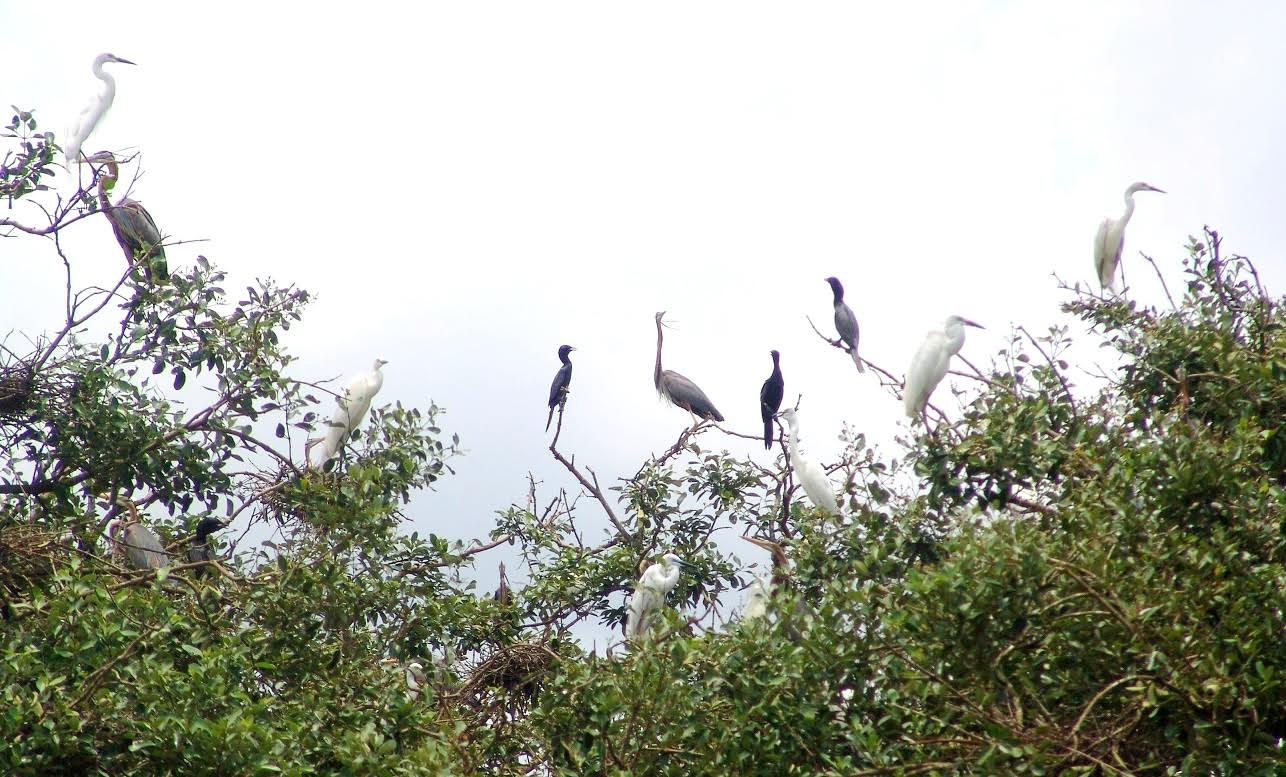
Kendrapara: With the monsoon coming to an end birds that came for nesting and breeding during the rains, have started returning from the Mathaadia heronry inside the Bhitarkanika National Park with their chicks.
Although thousands of birds have started their return journey, there are still several flocks of monsoon birds that have not yet exited the Mathaadia heronry, sources in the national park said.


In 10 to 12 days all monsoon birds and their chicks would exit Bhitarkanika as the chicks have become juveniles, the sources added.
Ten of the 11 species which generally come to the national park during the monsoon came this time to the Mathaadia heronry.
The bird species that visited Mathaadia this monsoon are Asian Open Bill Stork, Large Egret, Intermediate Egret, Little Egret, Purple Heron, Grey Heron, Little Cormorant, Black Crowned Night Heron, Black Headed Ibis and the Darter.
This year only a small number of Little Egrets came to Bhitarkanika, but Asian Open Bill Stork once again came in large numbers though it is less compared to last year.
A total of 81,254 Asian Open Bill Storks, including 33,856 adults, came to Mathaadia and Bagagahan heronries last year, but this time only 65,451, comprising 28,458 adults and 36,995 chicks, were spotted during the census, said Bimal Prasanna Acharya, divisional forest officer (DFO) of Rajnagar Mangrove Forest and Wildlife Division.
Forest officials spotted 14,229 nests of Asian Open Bill Stork and the number of chicks was estimated at 36,995. This time 136 adult Little Egrets came, and built 68 nests from which 170 chicks emerged, said sources.
According to official sources, the species built nests on Bani, Guan and Choranda trees which are mangrove species. The birds built 1543 nests on Bani trees, 367 nests on Guan trees and one on a Choranda tree, this monsoon.
This year, not even a single nest was spotted at the Bagagahan heronry, which was once a favourite nesting place for monsoon birds.
With the arrival of monsoon, thousands of birds come to Bagagahan and Mathaadia heronries inside the Bhitarkanika National Park for breeding and nesting.
The two heronries look colourful during the monsoon. The dense mangrove and its pollution free atmosphere attract thousands of nesting birds. The nesting ends by mid-November.
PNN