
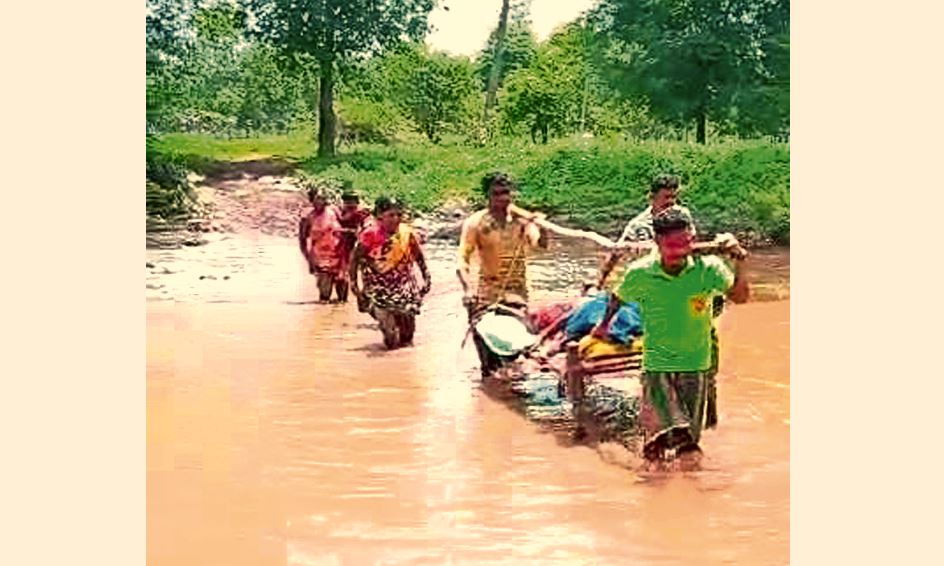
Nabarangpur: Development has stalled for hundreds of villages in the district, cut off by poor or non-existent roads. In emergencies, residents are forced to carry patients to hospitals on slings or makeshift cots, highlighting the stark lack of basic infrastructure.
In as many as 259 villages in Nabarangpur district, the situation is so dire that even motorcycles cannot reach them—let alone ambulances. Pregnant women, new mothers, and critically ill patients are often carried on cots or on shoulders to the nearest motorable road, laying bare the severe gaps in rural infrastructure.
During monsoon, 124 villages become completely cut off due to muddy and uneven terrains, while 135 villages remain beyond the reach of ambulance services throughout the year.
Also Read: Wildlife trafficking racket busted; five arrested
Block-wise data underlines the scale of the crisis: Five villages in Papadahandi, 38 in Tentulikhunti, three in Nandahandi, 27 in Jharigaon, 42 in Raighar, 14 in Chandahandi and two in Umerkote have no motorable roads.
The administration has set up nine maternity waiting homes, each with six beds, to support expectant mothers from remote areas. However, repeated demands to increase bed capacity from 10 to 15 have yet to be addressed.
Women from inaccessible regions are brought to these centres days before delivery to ensure safer childbirth. Despite such measures, poor connectivity continues to weaken healthcare outcomes.
The situation is further compounded by a shortage of doctors and specialists. Even where medical facilities exist, delays in reaching out to the patients raise concerns about the effectiveness of healthcare services in the district.
Although multiple government schemes and grants target rural development, gaps in implementation—particularly in road infrastructure—remain evident. Many affected villages are located in forest areas, where road construction faces administrative and legal hurdles.
Experts, however, question whether these challenges justify prolonged deprivation of basic services. They call for a coordinated approach, including special policy measures and simplified clearances for road construction in forest regions.
Expanding mobile medical units and organising regular health camps in remote pockets are also seen as critical. Incentives to attract doctors to underserved areas have been suggested.
“Roads are not merely a means of transport; they are lifelines,” observers say, warning that without connectivity, development efforts will continue to fall short.
When contacted, District Rural Development Agency Chief Development Officer Biranchi Narayan Darwan said road projects are progressing despite challenges related to forested areas. He noted that securing forest clearance in Papadahandi block remains difficult, while road works in Tentulikhunti block are nearing completion.