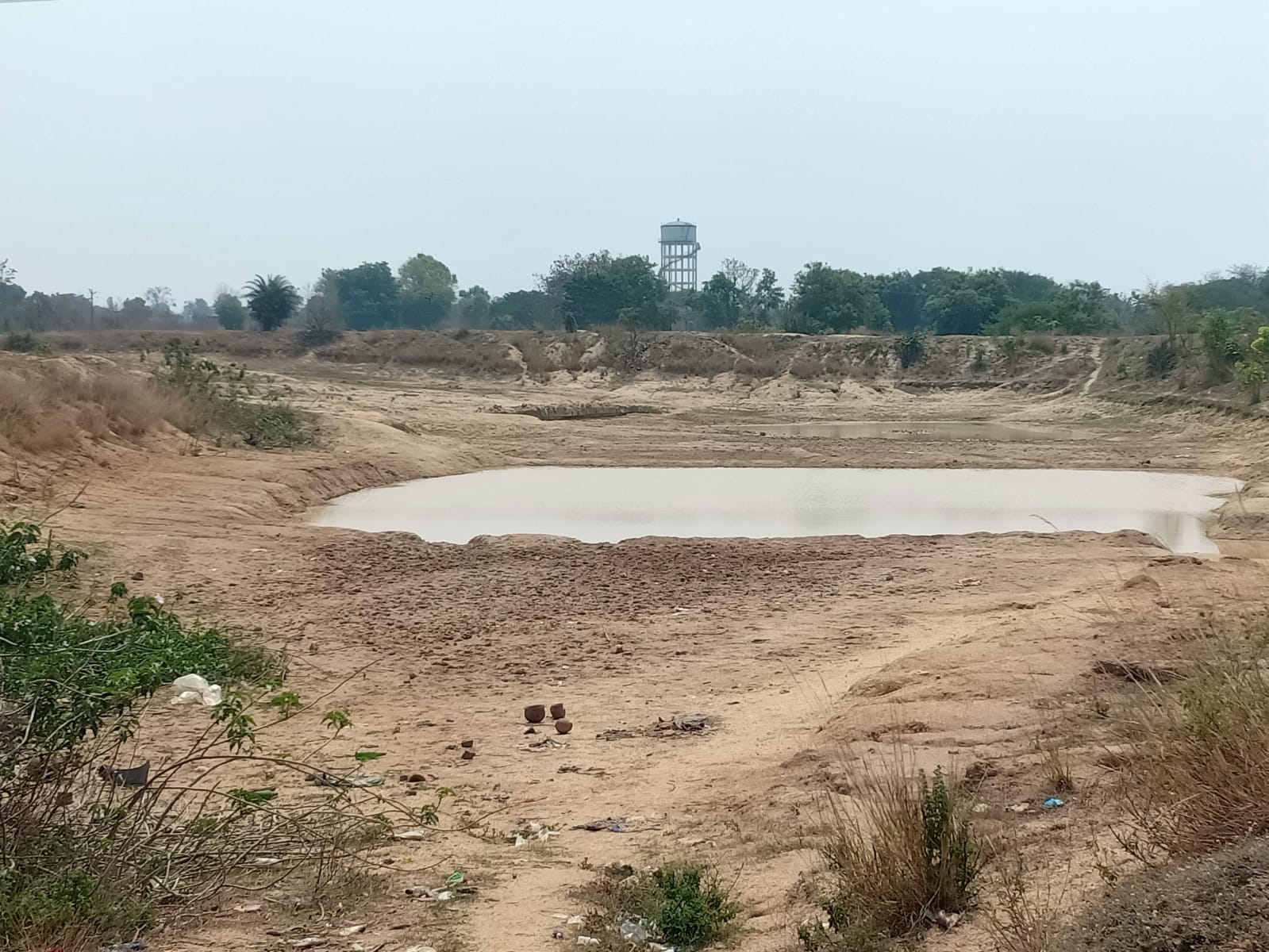
Kesinga: Severe heatwave conditions have led to a sharp depletion of water sources across Kesinga block in Kalahandi district, creating acute hardship for residents and posing serious challenges for livestock.
According to reports, water levels in streams, ponds, check dams and tube wells across all 26 gram panchayats have declined significantly. Most of the 554 government and private ponds in the block now hold only two to five feet of water, while several others have dried up completely.


Household wells are also running dry as the groundwater level continues to fall. Temperatures in the region have been rising steadily. After recording 36.5 degrees Celsius earlier in March, the mercury climbed to 39.8 degrees March 29 and has now reached 41 degrees (Wednesday), according to officials of the Central Water Commission.
The intensifying heat, coupled with falling groundwater levels, has led to a shortage of drinking water, leaving residents distressed. Farmers, too, are facing difficulties in carrying out Rabi cultivation due to the water scarcity. The Rural Water Supply and Sanitation (RWSS) department has installed 1,810 tube wells across villages in the block.
However, declining groundwater has affected their functionality in several areas. To address complaints, the department has deployed a mobile repair unit to attend to faulty tube wells promptly. The situation has also adversely affected domesticated animals, including cows, goats, sheep and ducks, which are struggling to get water for drinking and bathing as ponds, rivers and check dams dry up.
Officials from the Minor Irrigation department said there are 60 check dams in the block, of which 18 are currently non-functional, while others have only limited water reserves. RWSS Sub-Divisional Officer Dharmendra Seth said arrangements have been made to respond quickly to complaints. “We have deployed a mobile unit. As soon as we receive a call from any village, our team reaches the spot and repairs the tube wells,” he said.