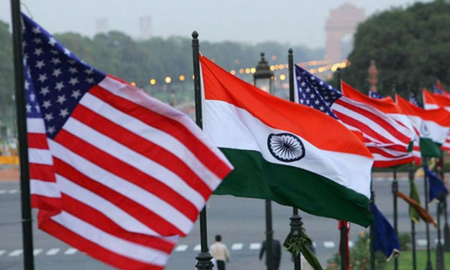
New Delhi: India and the US are “very close” to finalising the framework for their proposed bilateral trade agreement, Commerce Secretary Rajesh Agrawal said Monday, noting that both nations are actively engaged in negotiations.
The two countries are holding two parallel negotiations — one on a framework trade deal to address the high tariffs and another on a comprehensive bilateral trade agreement (BTA).


The new US Deputy Trade Representative, Rick Switzer, was here last week for trade talks with the secretary.
During Switzer’s visit, both sides took stock of bilateral trade relations and reviewed the progress of negotiations of the framework deal and the comprehensive BTA.
“We are very close on the framework deal, which we feel can be done in a short period of time. But I would not like to put a time period on that,” Agrawal told reporters here.
Asked whether more formal rounds would be held on the BTA, he said talks in the final stage normally do not require such rounds.
There may not be a formal round, but both physical and virtual meetings will take place close to completion, the secretary noted.
“So, we are moving in that zone, and we are working tirelessly to see as fast as we can,” he added.
Citing the example of the ongoing talks with New Zealand, the secretary said once “we are in a zone”, where a few things or areas are left to be addressed, no formal rounds take place.
With New Zealand, “we are moving towards a closure”, he said, adding that talks are happening on a daily basis.
“Last stage (talks) are like the most difficult things where maybe the principals need to take a call at the secretary or minister level,” Agrawal pointed out.
In case of the European Union, he said, “We are narrowing down the differences”.
“There is a set of differences on the table where we are not able to agree…we are virtually engaged…These discussions are (happening) on a regular basis,” he said.
These talks are important as the Trump administration has imposed steep 50 per cent tariffs on Indian goods entering American markets. The outcomes will also have a positive influence on the trajectory of the rupee, which has depreciated to lifetime lows lately and also breached the psychologically important 90-to-a-dollar mark.
The Indian industry and exporters are eagerly waiting for the conclusion of the negotiations and announcement of the deal, as the high import duties are hurting their shipments to America.
Though they are exploring other markets to maintain their export profits, the US is a key destination for them as it accounts for about 18 per cent of the country’s exports.
First, the US imposed a 25 per cent duty on Indian goods, stating trade deficit concerns with India, which stood at around USD 46 billion in 2024-25. An additional 25 per cent penalty was imposed later on India for buying Russian crude.
India has stated that the resolution of these tariffs would be key to firming up the first phase of the trade deal.
As part of the pact, the US is seeking duty concessions on agri products like almonds, corn and apples, and industrial goods. India has strongly opposed any concessions on the agri and dairy sectors. India has stated that it will not compromise the interests of farmers and MSMEs.
PTI