Odisha News, Odisha Latest news, Odisha Daily - OrissaPOST
  • Home
  • Trending
  • State
  • Metro
  • National
  • International
  • Business
  • Feature
  • Entertainment
  • Sports
  • More..
    • Odisha Special
    • Editorial
    • Opinion
    • Careers
    • Sci-Tech
    • Timeout
    • Horoscope
    • Today’s Pic
  • Video
  • Epaper
  • News in Odia
  • Home
  • Trending
  • State
  • Metro
  • National
  • International
  • Business
  • Feature
  • Entertainment
  • Sports
  • More..
    • Odisha Special
    • Editorial
    • Opinion
    • Careers
    • Sci-Tech
    • Timeout
    • Horoscope
    • Today’s Pic
  • Video
  • Epaper
  • News in Odia
No Result
View All Result
OrissaPOST - Odisha Latest news, English Daily -
No Result
View All Result

A rebellion for ecological democracy

Birsa Munda’s rebellion made the British reconsider their statutes and recognize the rights of tribals

Post News Network
Updated: November 14th, 2018, 22:16 IST
in Opinion
0
Share on FacebookShare on TwitterShare on WhatsAppShare on Linkedin

Debendra Kumar Biswal

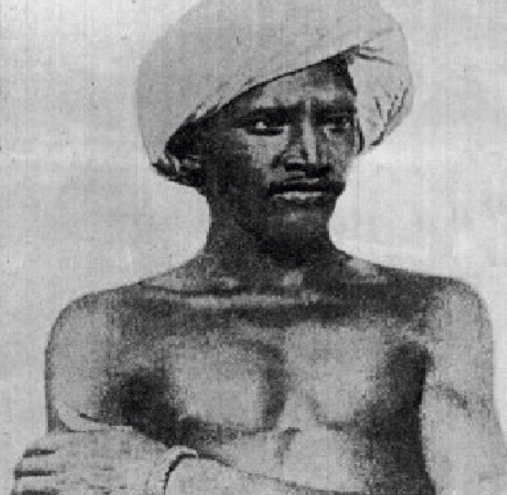
Thursday, November 15, is the birth anniversary of Birsa Munda (1875-1900), known as Dharti Abba or Bhagwan among adivasis of eastern India. Besides being a freedom fighter, his ideas of customary rights to territories, control of dispossession and utilisation of land and natural resources of tribal communities seems to be useful and in many instances more relevant than the United Nations MDGs, Convention of Biological Diversities and state parties empowered by dominant jurisprudence of states.


Also Read

Why do slums keep cropping up?

1 day ago
Lekha Rattanani

MOMENT OF ACCOUNTABILITY

1 day ago

The Munda rebellion or ‘Ulgulan’ (1895-1900) under the leadership of Birsa in the Chotanagpur region of Jharkhand was significant in three ways: the way it forced colonial government to introduce laws to regulate taking away of land of tribals by dikus (outsiders); the way it proved that tribals had the capacity to protest against injustice and to preserve customary laws through indigenous techniques; and the way it guided future policymakers to recognise Birsa’s idea of “historical injustice” in shaping the present day Panchayat Extension to Scheduled Areas (PESA) Act, Forest Rights Act (FRA) and several environmental movements of the twentieth century.

Birsa’s revolt had twofold objectives; first to protest against planned destruction of forest-based tribal society by the British and to drive out ‘dikus’ — dacoits or outsider non-tribals who made the tribal people dependent on them. The British laws stripped tribals of their natural rights. They tried to introduce zamindari/jagirdari or thekedari (private property) tenancy system in place of traditional khuntkatti system (joint land holding by tribal lineages) of cultivation, to alienate the tribal peasantry. In a similar way, the ‘dikus’ caused indebtedness, slave like existence and beth-begari (forced labour) among tribals. Birsa waged a guerrilla war against a diku-backed British government in the 1890s. The bow and arrow, though, was no match for British firepower and Birsa was caught and martyred in Ranchi Jail June 9, 1900.

Though the movement was short-lived, its impact was powerful; it forced the state to take effective measures to solve problems of the adivasis of Chotanagpur belt. Among such measures, an initial one was the abolition of beth-begari and introduction of Chotanagpur Tenancy (CNT) Act in 1908. The Act was aimed at providing a degree of protection to the tribes of Chotanagpur by making khuntkatti tenures secure from encroachment by landlords; it fixed rents in perpetuity and made sale of these lands for any purpose other than arrears of rent illegal. The establishment of khuntkatti rights served as beacon for other rights existing today in the tribal areas of India.

Birsa’s rebellion and self-perception were assimilation of two powerful mindsets: messianism and revolutionary activism. He advised his followers to pursue their original, traditional tribal religious system, particularly against large-scale deforestation — by the outsiders for farming and the British for developing industries.

Marxists suggest Birsa’s rebellion was an agrarian revolt of tribal communities, as it has its roots in Indian Forest Act which deprived tribal groups of their land. Subaltern theorists suggest an indigenous political-theological movement, as it targeted toppling of power structures and attack on Christian missionaries.

Contrary to theoretical discourse, Birsa Munda proved that adivasis were historically never under the ‘external system’ and were not demanding justice for themselves from the biased and oppressive system; their right to decide for themselves and the desire for natural freedom must be recognised.

Birsa proved before the colonial government that the existing customs, such as those regarding forest occupancy rights and right to claim land, were better than their statutes. Because these have provisions of self governing strategies, even the least assertive individuals had a voice; it opposed the idea of private property and believed in community ownership and collective action. The British were forced to enact laws such as the CNT Act based of Birsa Munda’s idea of natural rights and justice.

The writer is assistant professor, Centre for Tribal and Customary Law, Central University of Jharkhand, Ranchi.


Tags: Birsa MundaDebendra Kumar BiswalOpinionORISSA POST
Share26TweetSendShare
Suggest A Correction

Enter your email to get our daily news in your inbox.


OrissaPOST epaper Sunday POST OrissaPOST epaper

Click Here: Plastic Free Odisha

#MyPaperBagChallenge

Diptiranjan Biswal

December 12, 2019
#MyPaperBagChallenge

Jhili Jena

December 12, 2019
#MyPaperBagChallenge

Spinoj Pattnaik

December 12, 2019
#MyPaperBagChallenge

Sipra Mishra

December 12, 2019
#MyPaperBagChallenge

Pratik Kumar Ghibela

December 12, 2019
#MyPaperBagChallenge

Ipsita

December 12, 2019
#MyPaperBagChallenge

Sitakanta Mohanty

December 12, 2019
#MyPaperBagChallenge

Pitabas Tripathy

December 12, 2019
#MyPaperBagChallenge

Jyotshna Mayee Pattnaik

December 12, 2019
#MyPaperBagChallenge

Nishikant Rout

December 12, 2019
#MyPaperBagChallenge

Saishree Satyarupa

December 12, 2019
#MyPaperBagChallenge

Matrumangal Jena

December 12, 2019
#MyPaperBagChallenge

Anshuman Sahoo

December 12, 2019
#MyPaperBagChallenge

D Rama Rao

December 12, 2019
#MyPaperBagChallenge

Arya Ayushman

December 12, 2019
#MyPaperBagChallenge

Lopali Pattnaik

December 12, 2019
#MyPaperBagChallenge

Adweeti Bhattacharya

December 12, 2019
#MyPaperBagChallenge

Aman Kumar Barisal

December 12, 2019
#MyPaperBagChallenge

Anup Mahapatra

December 12, 2019
#MyPaperBagChallenge

Archit Mohapatra

December 12, 2019
#MyPaperBagChallenge

Mandakini Dakua

December 12, 2019
#MyPaperBagChallenge

Manas Samanta

December 12, 2019
?????????????????????????????????????????????????????????????????????????????????????????????????????????????????????????????????
#MyPaperBagChallenge

Dibya Ranjan Das

December 12, 2019
#MyPaperBagChallenge

Ankita Balabantray

December 12, 2019
#MyPaperBagChallenge

Adrita Bhattacharya

December 12, 2019
#MyPaperBagChallenge

Kamana Singh

December 12, 2019
#MyPaperBagChallenge

Bijswajit Pradhan

December 12, 2019
#MyPaperBagChallenge

Vandana Singh

December 12, 2019
#MyPaperBagChallenge

Debasis Mohanty

December 12, 2019
#MyPaperBagChallenge

Keshab Chandra Rout

December 12, 2019

Archives

Editorial

Gunman & Trump

trump
April 29, 2026

Americans must have heaved a sigh of relief that a man rushing with a gun and firing shots at the...

Read moreDetails

Tehran & Moscow

Vladimir Putin and Abbas Araghchi
April 28, 2026

Iran has made an intelligent move to send its Foreign Minister Abbas Araghchi to meet Russian President Vladimir Putin. The...

Read moreDetails

Economic Shocks

Indian Economy
April 27, 2026

The latest projections by the International Monetary Fund (IMF) offer a sobering snapshot of India’s economic trajectory. As per IMF...

Read moreDetails

Exclusion Doctrine

Rights & Restrictions: AAKAR PATEL
April 26, 2026

Aakar Patel A story under this headline was reported this month: ‘No Muslim name finds place in BJP’s Bengal list’....

Read moreDetails
  • Home
  • State
  • Metro
  • National
  • International
  • Business
  • Editorial
  • Opinion
  • Sports
  • About Us
  • Advertise
  • Contact Us
  • Jobs
Developed By Ratna Technology

© 2025 All rights Reserved by OrissaPOST

  • News in Odia
  • Orissa POST Epaper
  • Video
  • Home
  • Trending
  • Metro
  • State
  • Odisha Special
  • National
  • International
  • Sports
  • Business
  • Editorial
  • Entertainment
  • Horoscope
  • Careers
  • Feature
  • Today’s Pic
  • Opinion
  • Sci-Tech
  • About Us
  • Contact Us
  • Jobs

© 2025 All rights Reserved by OrissaPOST

    • News in Odia
    • Orissa POST Epaper
    • Video
    • Home
    • Trending
    • Metro
    • State
    • Odisha Special
    • National
    • International
    • Sports
    • Business
    • Editorial
    • Entertainment
    • Horoscope
    • Careers
    • Feature
    • Today’s Pic
    • Opinion
    • Sci-Tech
    • About Us
    • Contact Us
    • Jobs

    © 2025 All rights Reserved by OrissaPOST