
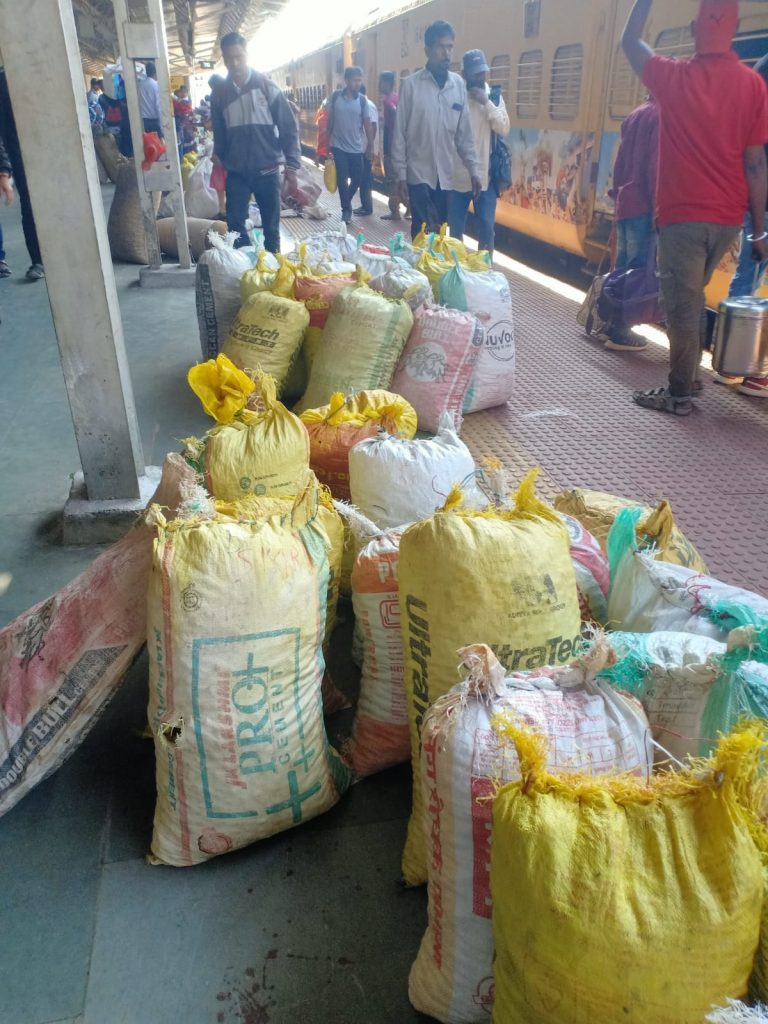
Kesinga: Notwithstanding the rampant daylight smuggling of ber (Indian jujube or kul fruit) through trains, resulting in huge revenue losses to the Indian Railways, the silence and inaction of the railway authorities have baffled many.
Reports said huge quantities of the succulent fruit are allegedly being transported from several railway stations under the Sambalpur division to Andhra Pradesh, without any booking.
Traders from Andhra Pradesh are dispatching thousands of quintals of ber in both express and passenger trains during daytime from Kesinga, Narla, Rupra Road, Lanjigarh and Titilagarh railway stations without proper booking.
Despite the huge scale of the operation, questions are being raised over the apparent inaction of railway authorities, including travelling ticket examiners, Railway Protection Force (RPF) and Government Railway Police (GRP).
Locals allege that the smuggling of such large quantities of the fruit is resulting in substantial revenue losses to the Railways. With the ber harvest season currently underway, traders are purchasing the fruit from farmers in rural areas at prices ranging from `1,500 to `2,000 per quintal.
The produce is then transported via middlemen to various railway stations, from where it is sent by train to cities such as Vizianagaram, Bobbili and Visakhapatnam in Andhra Pradesh.
Sources said the fruit is supplied to factories where it is processed into pickles and ber powder, generating significant profits for factory owners.
Passengers have also expressed concern over safety and inconvenience.
They alleged that train coach entrances are often blocked by sacks of ber, causing difficulties for commuters, particularly elderly passengers, women and children, while boarding and alighting.
Several travellers and citizens have urged the authorities ofthe Sambalpur railway division to look into the rampant smuggling of ber and take appropriate action to prevent revenue loss, apart from ensuring passengers’ safety.