Manoj Kumar Jena, OP
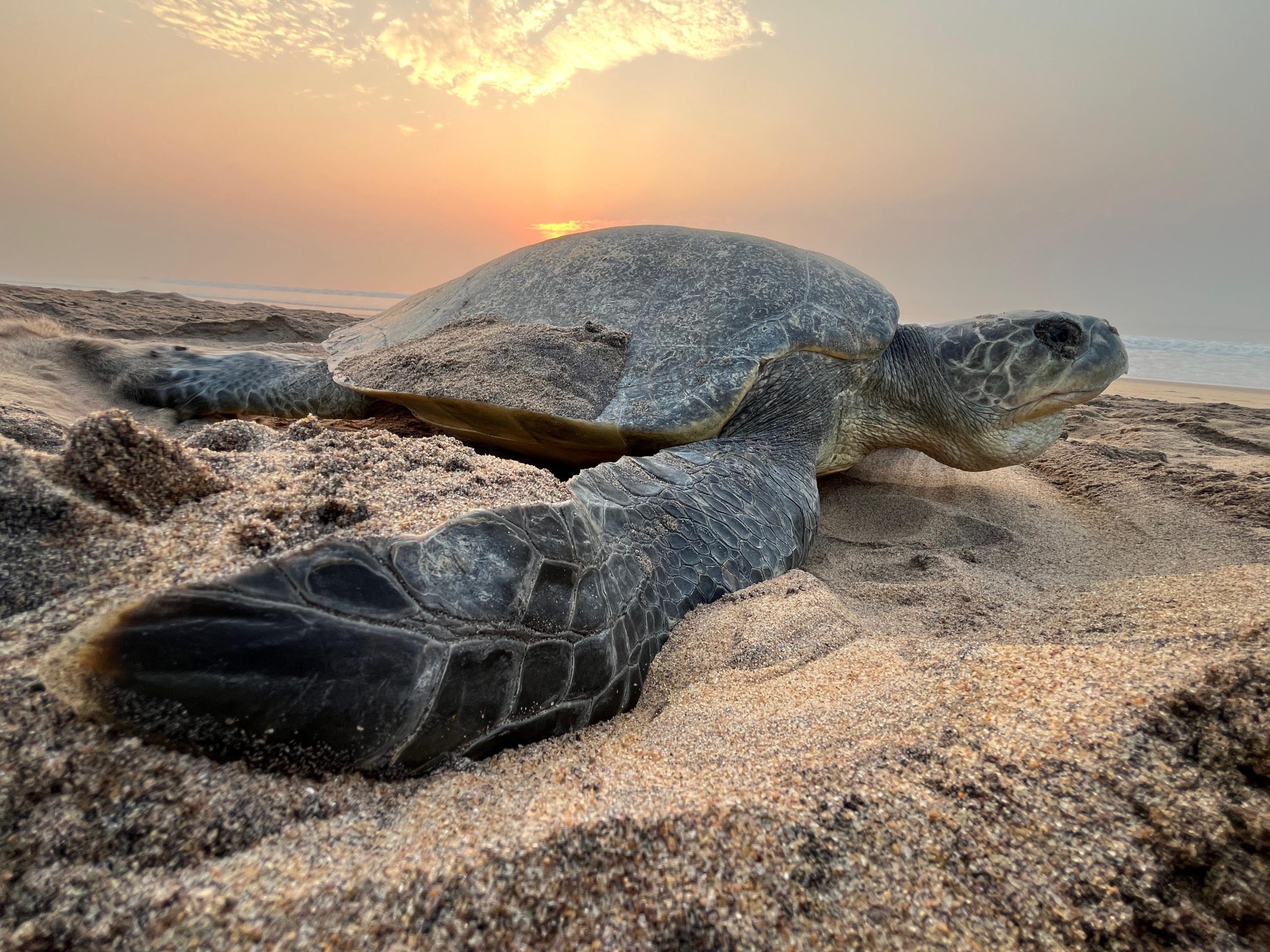
Bhubaneswar: As people across the globe prepare to celebrate World Turtle Day Saturday, amid growing threats to the ancient marine species from pollution, climate change, habitat destruction and illegal wildlife trade, a handful of conservationists in the state have devoted their lives to protecting turtles and preserving their fragile nesting habitats.


For Bichitrananda Biswal, 44, from Puri district, turtle conservation is more than a mission, it is a lifelong commitment shaped by memories from his teenage years. For nearly three decades, he has worked tirelessly to protect Olive Ridley turtles and their mass nesting grounds near the Devi River mouth.
“Since 1996, I have been involved in protecting the mass nesting site of Olive Ridley turtles at the Devi River mouth. During my teenage years, I saw hundreds of dead Olive Ridleys lying on the shore. That sight made me decide to dedicate myself to protecting them, and the effort continues even today,” Biswal said.
Over the years, he has played a key role in protecting millions of sea turtles arriving on Odisha’s coast during the annual Arribada. Yet, he believes the fight is far from over. Rising pollution and environmental degradation, he said, continue to threaten the survival of the endangered species and demand stronger public awareness initiatives.
The same spirit of dedication is reflected in the work of Bipro Charan Behera, 32, from Ganjam district, who inherited the mantle of conservation from his father, Odisha’s first turtle activist, the late Dumba Rudhar Behera. For the last 16 years, he has been working at the Rushikulya nesting site, protecting hatchlings and nesting grounds from multiple threats.
“I learned the importance of turtle conservation from my father. For the last 16 years, I have been working at the Rushikulya nesting site. While the government and the Forest Department are making efforts to protect these sites, beach erosion remains a major threat and needs to be addressed through a collective approach,” Behera said.
Apart from beach erosion, Behera stressed the need for greater public awareness and stricter regulation of tourist and trawler movement during the sensitive Arribada season, when lakhs of turtles arrive to nest along Odisha’s coastline. For Puri district’s Soumya Ranjan Biswal, 30, conservation begins at the grassroots level.
Working closely with local communities, he believes the younger generation has a crucial role to play in safeguarding marine biodiversity. “If the Olive Ridley popula tion declines, it will impact the marine ecosystem of the Bay of Bengal. Around 2.5 million turtles come to Odisha for Arribada through the Bay of Bengal.
Their movement is important for the ecosystem along India’s east coast. We need to educate people about the scientific monitoring of Olive Ridley turtles and habitat protection,” he said.
Biswal also warned that rapid beach erosion continues to shrink nesting grounds, posing a serious challenge to long-term conservation efforts. Meanwhile, in Kendrapara, Bijay Kumar Kabi, 54, has spent the last 26 years campaigning for cleaner coastlines and safer waters for marine life.
Along with his team, he has been running plastic-free awareness drives and working to minimise disturbances during Arribada. “We have installed dustbins on around 50 boats because ghost nets are responsible for the deaths of many sea turtles and other aquatic species.
This initiative helps prevent waste from entering the sea. People should avoid using plastic while visiting beaches because marine animals often consume plastic, leading to fatal consequences,” Kabi said.