Bhubaneswar: Ministry of Housing and Urban Affairs (MoHUA) Housing for All Joint Secretary Kuldeep Narayan visited the capital city to review the implementation of the Pradhan Mantri Awas Yojana–Urban (PMAY-U) and PMAY-U 2.0 in the state Saturday.
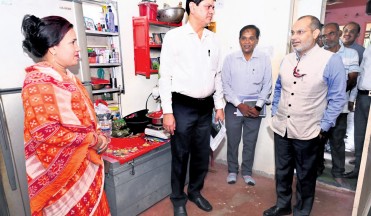
During his visit, Narayan inspected three significant project sites in the City, showcasing different verticals and innovative approaches under the flagship housing scheme. His first visit was to the Affordable Housing in Partnership (AHP) project at Buddha Vihar, Chandrasekharpur, where he reviewed the progress of housing units being developed to provide affordable and quality living spaces to urban benefi ciaries.
He then visited Hare Krushna Nagar, Saileshree Vihar, where houses are being provided to beneficiaries under the Beneficiary-Led Construction (BLC) vertical of PMAY-U. Interacting with beneficiaries, Narayan appreciated the efforts made by the state in facilitating individual house construction and ensuring timely delivery.
The third site, Pragati Bihar Slum, stood out as a unique and inclusive housing initiative under the BLC vertical of PMAY-U 2.0. A total of 44 houses have been sanctioned here, of which 34 beneficiaries belong to the transgender community.
The project is being developed as a model inclusive housing cluster with technical support from noted architect Ashok B Lall, in collaboration with the United Nations Environment Programme (UNEP). This pilot initiative aims to demonstrate sustainable, climate-responsive, and energy-efficient housing solutions.
Narayan appreciated the state’s efforts in promoting inclusive and environmentally sustainable housing, terming it a progressive step towards equitable urban development.
Later, Narayan held a comprehensive review meeting at Kharvela Bhavan with Housing and Urban Development (H&UD) department Additional Chief Secretary Usha Padhee, along with senior officials from Bhubaneswar Development Authority (BDA), Bhubaneswar Municipal Corporation (BMC) and H&UD department. The meeting focused on the overall progress of PMAY-U and PMAY-U 2.0 in the state, covering key achievements, challenges, and areas requiring attention.
Narayan provided valuable guidance to further strengthen implementation, emphasising timely completion of projects, quality assurance, and enhanced beneficiary satisfaction.
Strategic discussions were also held on policy interventions and reform measures necessary for the effective rollout of PMAY-U 2.0.