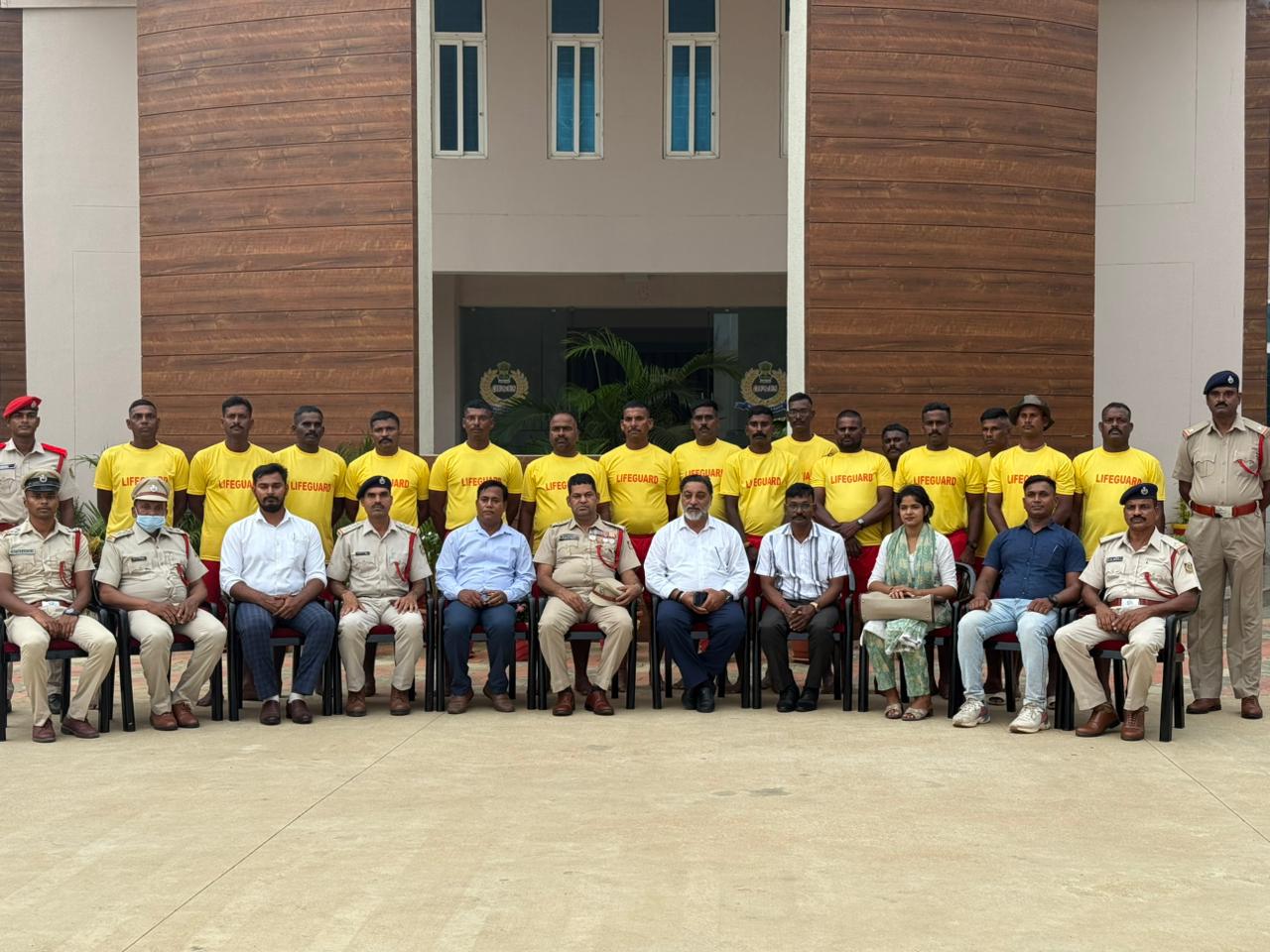
Bhubaneswar: In a unique initiative aimed at strengthening beach and water safety, a comprehensive residential lifeguard training programme was launched at the Odisha State Watermanship and Lifeguard Institute (OSWALI), Konark, with the first batch commencing Monday.
The initiative marks the start of an intensive capacity-building exercise for lifeguards across the state. The programme will be conducted in 11 continuous batches, each lasting 12 days, over nearly one and a half months. A total of 176 government and private lifeguards will be trained during this phase.


The curriculum has been designed to equip participants with critical skills such as rescue techniques, CPR and first-aid, open water operations, disaster response, tourist safety protocols, and watersports safety standards. Earlier this year, the Department of Tourism (DoT) took a major step towards positioning the state as a safe and premier adventure tourism destination by formalising strategic partnerships to strengthen water-based tourism and safety infrastructure.
In this regard, the department signed Memoranda of Understanding (MoUs) with the National Institute of Water Sports (NIWS), Goa, and Odisha Fire & Emergency Services (OFES) to boost capacity building, enhance safety standards, and bring advanced technical expertise to Odisha’s rapidly expanding watersports ecosystem. The initiative forms part of a broader statewide vision to train nearly 2,000 lifeguards over the next two to three years, creating a strong and scalable safety ecosystem for Odisha’s coastal and inland water tourism.
The collaboration with NIWS will ensure that all training modules meet national standards and certification protocols. To support scientific deployment and long-term planning, comprehensive mapping of waterbodies, including their usable stretches, has already been completed across all 30 districts of the state. Based on this data, the process of preparing a district-wise pool of interested youth for lifeguard training is currently underway, enabling systematic capacity building and deployment across major tourism zones such as beaches, lakes, dams and riverfronts.
The lifeguards trained in this phase will be strategically deployed at key tourist destinations including Puri, Chandrabhaga and other prominent beaches. The continuous batch model adopted for the programme is expected to accelerate capacity building and significantly strengthen Odisha’s beach and water safety network ahead of the peak tourist season.