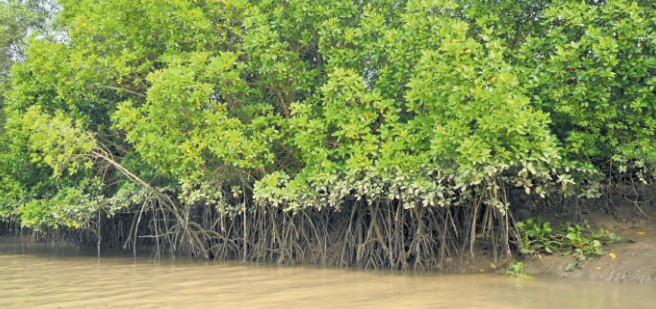
Kendrapara/Bhubaneswar: Odisha has recorded a 16.6 per cent rise in mangrove cover over the past decade, increasing from 222 sq. km to 259.06 sq. km, according to India State of Forest Report (ISFR) data.
Kendrapara district alone has added around 9.43 sq. km of mangroves. Across the state, mangrove cover has expanded by 9.89 sq. km in the last four years, reflecting sustained conservation efforts and improved coastal ecosystem management.


The State’s mangroves are spread across five coastal districts, with Bhitarkanika National Park in Kendrapara alone covering over 212 sq. km, making it one of India’s most significant mangrove ecosystems. Backed by support from the Compensatory Afforestation Fund Management and Planning Authority (CAMPA), Odisha continues to expand and strengthen its coastal conservation efforts.
A key strength of Odisha’s approach lies in combining science-based monitoring with on-ground restoration. Data buoys deployed by the National Centre for Sustainable Coastal Management under the Odisha Forestry Sector Development Project play a vital role in sustaining the ecological balance required for mangrove growth in Bhitarkanika.
They help detect pollution and environmental stress, enabling timely interventions and strengthening long-term conservation efforts. “Beyond plantation, efforts have focused on ecological restoration measures such as creek deepening to restore natural tidal flow, and targeted fencing to reduce anthropogenic pressure,” said Varadaraj Gaonkar, Divisional Forest Officer (DFO), Mangrove Forest Division (Wildlife), Rajnagar.
Odisha is also advancing innovative restoration methods such as the “fishbone channel” model, to revive degraded tidal zones. By restoring natural tidal flow, the technique has enabled regeneration of nearly 100 hectares of mangroves in Bhitarkanika over the past four years, boosting ecosystem resilience. “Community participation has been central to our success.
Residents actively engage in plantation activities, fostering a strong sense of ownership. Improved ecosystem health has also supported livelihoods indirectly, particularly through fisheries and related activities,” affirmed the DFO, Rajnagar.
The impact of these efforts is already visible on the ground. “Earlier, high tides would send floodwaters surging into our village, destroying roads, inundating homes, and even bringing crocodiles along with the currents.
Now the situation has improved significantly, bringing new hope and security for the community,” shared Uma Rani Giri, a resident of Kanaknagar village under the Rajnagar Forest Division.