Korukonda: The once-thriving tradition of making plates and bowls from siali leaves is fading fast in parts of Malkangiri district, leaving many tribal families struggling to sustain their livelihoods.
For decades, siali leaf plates and bowls were an integral part of feasts and social gatherings in Korukonda block and nearby areas, including Balimela town.


Locally made and eco-friendly, these items were widely used during festivals, community events and village functions.
However, the growing preference for cheap plastic and thermocol plates, bowls and cups has sharply reduced the demand for the traditional products.
Also Read: Avoid plastic, protect planet: Adyasha
As a result, the age-old craft that once supported many tribal households is slowly disappearing.
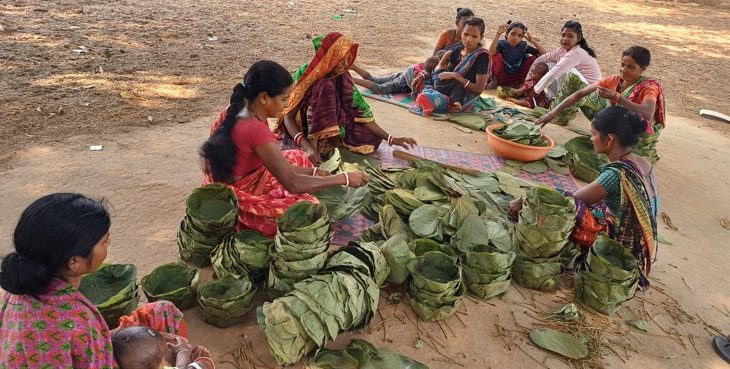
Earlier, villagers used to collect siali leaves from nearby forests and stitch them together using thin bamboo sticks to make plates and bowls.
The finished products were sold in local markets, providing families with a steady so with the market now flooded with modern disposable items, many tribal households have stopped collecting leaves or making the traditional utensils.
The decline in demand has directly affected the earnings of tribal communities, who once depended on this craft for survival.
Despite the downturn, some women in Colony No. 5 village under Chimtapalli panchayat of Korukonda block are trying to keep the tradition alive.
They still collect siali leaves from nearby forests and sit together under a tree in the village to stitch plates and bowls.
Siali fibre is also traditionally used to make ropes and other household items, but the use of such products is also declining due to a lack of promotion and market support.
Locals and intellectuals warn that if timely steps are not taken, the craft may disappear completely, depriving tribal families of a traditional source of livelihood.
They have urged the government to provide training, financial assistance and market support to craftsmen engaged in making siali leaf products.
Residents have also demanded that the district administration intervene to revive and promote the eco-friendly craft, which once formed the backbone of the rural tribal economy.