By Rajdeep Sardesai
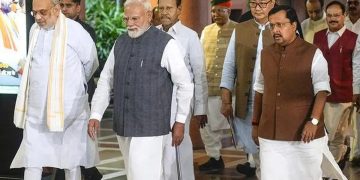
The images tell a story that would once have embarrassed Indian politicians. In Delhi, Trinamool Congress MPs preparing to switch sides appeared perfectly comfortable being seen in the company of senior BJP leaders and Union minister Bhupender Yadav. There was little attempt at secrecy, let alone discretion. In Maharashtra, Shiv Sena rebels travelled in chartered aircraft, stayed in luxury hotels and negotiated their political future under heavy security cover. They looked less like elected representatives wrestling with matters of conscience and more like executives negotiating a corporate takeover.


What is striking is not the act of defection itself. Indian politics has witnessed defections for decades. It is the complete absence of concern for public perception. There was no attempt to explain a shift in ideology, no appeal to principle, no effort to persuade voters that a larger cause was at stake. The message seemed simple: politics is a transaction and everyone knows the terms of the deal.
Even access to state resources now appears part of the bargain. As one Shiv Sena MP candidly admitted after switching sides: “If I want development funds for projects in my constituency, I have to switch.”
Perhaps this is the most significant political change of our times. Defections are no longer viewed as a betrayal of the electoral mandate. They have become normalised, accepted as just another instrument in the pursuit of power.
Predictably, every criticism of defections is met with the same response from BJP supporters. What about the Congress? Did defections not occur under Congress rule? Wasn’t “Aaya Ram, Gaya Ram” coined long before Narendra Modi and Amit Shah came to power?
The answer is yes. Defections are as old as Indian democracy. Under the Congress system too, opposition governments were dismissed, legislators switched sides to gain office, settle factional disputes or align with the dominant party of the day.
But that is also why the whataboutery misses the point. The issue is not whether defections existed before. The issue is whether they have changed in character.
Under the Congress era, defections were largely a symptom of a dominant-party system. Today, they have become a strategy for creating and sustaining one. That distinction matters because it helps explain one of the most important shifts in contemporary Indian politics.
Over the last decade, the BJP under Modi and Shah has emerged as perhaps the most formidable electoral machine independent India has witnessed. Its organisational strength, financial resources, communication apparatus and leadership structure have few parallels. Its electoral success deserves acknowledgement.
But that success has also produced a new political logic. Winning elections is no longer merely a means to exercise power. Electoral expansion itself has become an objective. Viewed through that prism, defections are not accidents. They are acquisitions.
Look at the pattern. The Congress government in Madhya Pradesh collapsed after the departure of Jyotiraditya Scindia and his loyalists. Maharashtra witnessed first the split in Shiv Sena and then the division of NCP. Across the North East, the BJP has steadily expanded by absorbing leaders and legislators from rival parties.
The objective often appears larger than winning a legislative vote. It is to weaken rival parties structurally, reduce their capacity to challenge the BJP and steadily expand the ruling party’s political footprint.
The BJP that once prided itself on ideological commitment and cadre loyalty now recruits extensively from rival camps. Critics jokingly describe it as the “Bharti Janata Party”, but the joke contains a deeper truth. The party has become extraordinarily successful at attracting, absorbing and redeploying political talent from across the political spectrum.
This marks a significant evolution in the BJP’s own political journey. The BJP of Atal Bihari Vajpayee sought to expand primarily through alliances, social coalitions and voter outreach. Vajpayee understood that political growth came through persuasion. The BJP of Modi and Amit Shah has often expanded through an M & A model (mergers & acquisition), absorbing leaders, legislators and sometimes entire political formations into its fold.
Repeatedly, opposition parties have alleged that investigative agencies, financial pressure and institutional leverage create incentives for politicians to reconsider their loyalties. The perception has become deeply embedded that the BJP is not merely India’s largest political party but also its most effective political “washing machine” guaranteeing immunity from prosecution.
Equally troubling is the manner in which the anti-defection law has been progressively circumvented. Introduced in 1985 to curb political horse-trading, the law increasingly resembles an obstacle course to be navigated rather than a constitutional principle to be respected.
The latest developments in Bengal are a case in point. An obscure intermediary political vehicle—the Nationalist Citizenship Party of India—is reportedly being used to facilitate defections while navigating around the anti-defection law. The ingenuity is dubbed a “masterstroke”. The implications for democratic accountability are far less admirable.
More troubling is the role of the judiciary. Cases involving party splits and disqualifications drag on for months and sometimes years. The unresolved Shiv Sena split remains perhaps the most striking example of judicial delay. By the time a verdict emerges, governments have survived, ministers have enjoyed office and political realities have become entrenched.
The larger concern goes beyond the fate of any individual party. It concerns the meaning of elections themselves. When citizens vote, they are choosing more than a candidate. They are choosing a party, a symbol, a programme and a political vision. If that mandate can be altered repeatedly through post-election manoeuvres, the voter’s choice becomes negotiable.
This is not an argument against political realignment. Parties evolve. Alliances change. Leaders can alter their views, especially in a political culture where inner-party democracy is weak. But if defections become routine instruments of power rather than exceptional acts of conviction, democracy risks becoming less a contest of ideas and more a marketplace of political assets.
Which brings us back to those images from Delhi and Maharashtra. The politicians involved appeared entirely unconcerned about being seen as participants in a political auction. There was no fear of public disapproval because the political culture itself has changed.
The story of defections in contemporary India is no longer merely about politicians changing parties. It is about the transformation of politics itself—from ideology to acquisition, from persuasion to aggregation, from conviction to transaction. And that may be the most consequential political shift of our times.
For when parties can acquire legislators as easily as corporations acquire companies for a price, elections cease to be the democratic verdict. They become merely the opening bid in an increasingly immoral Indian Political League.
The writer is a senior journalist and author.