Odisha News, Odisha Latest news, Odisha Daily - OrissaPOST
  • Home
  • Trending
  • State
  • Metro
  • National
  • International
  • Business
  • Feature
  • Entertainment
  • Sports
  • More..
    • Odisha Special
    • Editorial
    • Opinion
    • Careers
    • Sci-Tech
    • Timeout
    • Horoscope
    • Today’s Pic
  • Video
  • Epaper
  • News in Odia
  • Home
  • Trending
  • State
  • Metro
  • National
  • International
  • Business
  • Feature
  • Entertainment
  • Sports
  • More..
    • Odisha Special
    • Editorial
    • Opinion
    • Careers
    • Sci-Tech
    • Timeout
    • Horoscope
    • Today’s Pic
  • Video
  • Epaper
  • News in Odia
No Result
View All Result
OrissaPOST - Odisha Latest news, English Daily -
No Result
View All Result

This is how ‘superflares’ from the Sun could black out Earth

PTI
Updated: June 12th, 2019, 11:29 IST
in Feature
0
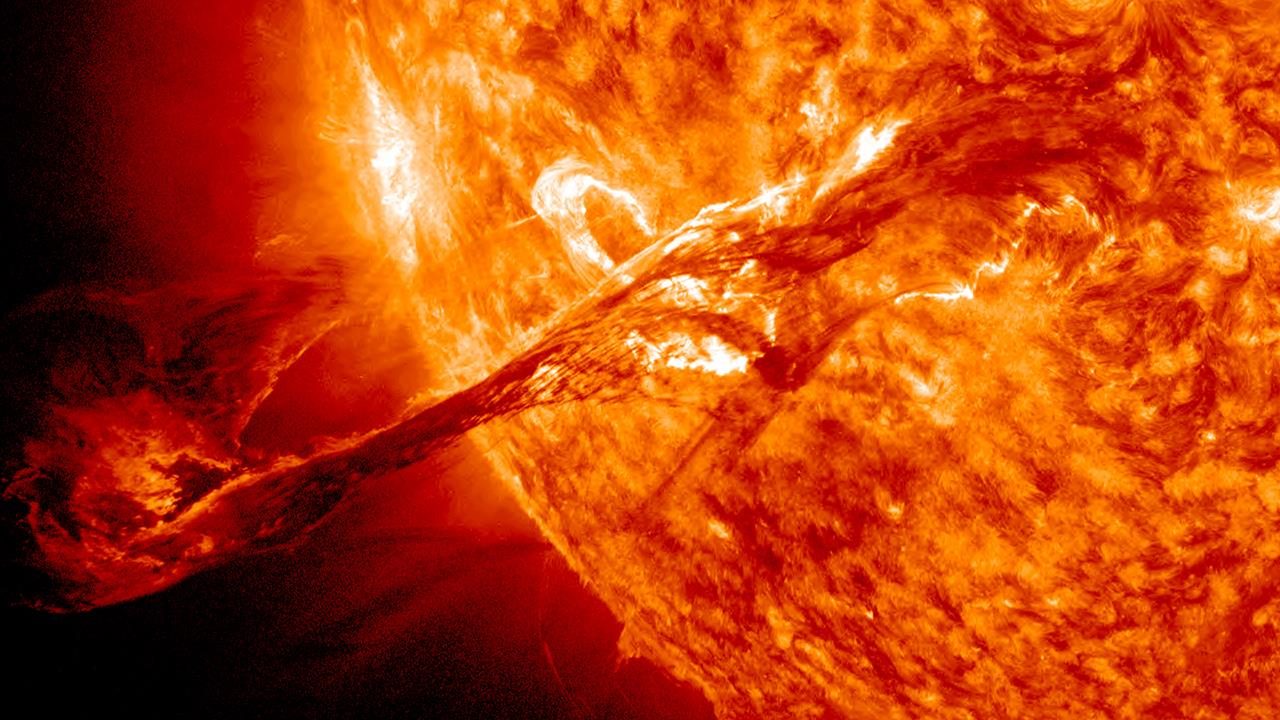
Astronomers probing the edges of the Milky Way have in recent years observed superflares -- huge bursts of energy from stars that can be seen from hundreds of light years away.

Astronomers probing the edges of the Milky Way have in recent years observed superflares -- huge bursts of energy from stars that can be seen from hundreds of light years away.

Share on FacebookShare on TwitterShare on WhatsAppShare on Linkedin

Washington: Superflares erupted from the Sun could disrupt electronics across the Earth, causing widespread black outs and shorting out communication satellites in orbit, scientists warn.

Astronomers probing the edges of the Milky Way have in recent years observed superflares — huge bursts of energy from stars that can be seen from hundreds of light years away.

Also Read

Viral: Boy chews lithium battery; result shocks users

3 days ago

Experts warn against early smartphone access to children

3 days ago

Until recently, researchers assumed that such explosions occurred mostly on stars that, unlike Earth’s, were young and active.

Scientists from University of Colorado (CU) Boulder in the US have found that superflares can occur on older, quieter stars like our own — albeit more rarely, or about once every few thousand years.

If a superflare erupted from the sun, the Earth would likely sit in the path of a wave of high-energy radiation, researchers said.

Such a blast could disrupt electronics across the globe, causing widespread black outs and shorting out communication satellites in orbit.

“Our study shows that superflares are rare events. But there is some possibility that we could experience such an event in the next 100 years or so,” said Yuta Notsu, a researcher in CU Boulder.

Scientists first discovered this phenomenon from an unlikely source: the Kepler Space Telescope. The NASA spacecraft, launched in 2009, seeks out planets circling stars far from Earth.

However, it also found something odd about those stars themselves. In rare events, the light from distant stars seemed to get suddenly, and momentarily, brighter.

Researchers dubbed those humongous bursts of energy ‘superflares’.

Notsu explained that normal-sized flares are common on the Sun. However, what the Kepler data was showing seemed to be much bigger, on the order of hundreds to thousands of times more powerful than the largest flare ever recorded with modern instruments on Earth.

“When our sun was young, it was very active because it rotated very fast and probably generated more powerful flares,” said Notsu, also of the National Solar Observatory in Boulder.

“But we didn’t know if such large flares occur on the modern sun with very low frequency,” he said.

To find out, researchers turned to data from the European Space Agency’s Gaia spacecraft and from the Apache Point Observatory in New Mexico.

Over a series of studies, the group used those instruments to narrow down a list of superflares that had come from 43 stars that resembled our sun. The researchers then subjected those rare events to a rigorous statistical analysis.

Based on the team’s calculations, younger stars tend to produce the most superflares. However, older stars like the Sun — which is 4.6 billion years old — also produce them occassionally.

“Young stars have superflares once every week or so. For the sun, it’s once every few thousand years on average,” Notsu said.

PTI

Tags: earthMilky WayNASAsunsuperflares
ShareTweetSendShare
Suggest A Correction

Enter your email to get our daily news in your inbox.


OrissaPOST epaper Sunday POST OrissaPOST epaper

Click Here: Plastic Free Odisha

#MyPaperBagChallenge

Adrita Bhattacharya

December 12, 2019
#MyPaperBagChallenge

Geetanjali Patro

December 12, 2019
#MyPaperBagChallenge

Anasuya Sahoo

December 12, 2019
?????????????????????????????????????????????????????????????????????????????????????????????????????????????????????????????????
#MyPaperBagChallenge

Dibya Ranjan Das

December 12, 2019
#MyPaperBagChallenge

Nishikant Rout

December 12, 2019
#MyPaperBagChallenge

Mrutyunjaya Behera

December 12, 2019
#MyPaperBagChallenge

Bijswajit Pradhan

December 12, 2019
#MyPaperBagChallenge

Sibarama Khotei

December 12, 2019
#MyPaperBagChallenge

Archit Mohapatra

December 12, 2019
#MyPaperBagChallenge

Diptiranjan Biswal

December 12, 2019
#MyPaperBagChallenge

Akshaya Kumar Dash

December 12, 2019
#MyPaperBagChallenge

Pratik Kumar

December 12, 2019
#MyPaperBagChallenge

Rajashree Pravati Mohanty

December 12, 2019
#MyPaperBagChallenge

Sarmistha Nayak

December 12, 2019
#MyPaperBagChallenge

Mandakini Dakua

December 12, 2019
#MyPaperBagChallenge

Manas Samanta

December 12, 2019
#MyPaperBagChallenge

Amritansh Mishra

December 12, 2019
#MyPaperBagChallenge

Spinoj Pattnaik

December 12, 2019
#MyPaperBagChallenge

Sisirkumar Maharana

December 12, 2019
#MyPaperBagChallenge

Subhajyoti Mohanty

December 12, 2019
#MyPaperBagChallenge

Jhili Jena

December 12, 2019
#MyPaperBagChallenge

Adyasha Priyadarsani Sendha

December 12, 2019
#MyPaperBagChallenge

Jyotshna Mayee Pattnaik

December 12, 2019
#MyPaperBagChallenge

Ramakanta Sahoo

December 12, 2019
#MyPaperBagChallenge

Praptimayee Biswal

December 12, 2019
#MyPaperBagChallenge

Pratyasharani Ghibela

December 12, 2019
#MyPaperBagChallenge

Matrumangal Jena

December 12, 2019
#MyPaperBagChallenge

Kamana Singh

December 12, 2019
#MyPaperBagChallenge

Priyabrata Mohanty

December 12, 2019
#MyPaperBagChallenge

Sarfraz Ahmad

December 12, 2019

Archives

Editorial

Unfair Deal

Donald Trump
February 9, 2026

After punishing Indian exporters with a steep 50 per cent tariff on their goods sold in America for more than...

Read moreDetails

Coerced Alignment

February 8, 2026

By Aakar Patel Violation of sovereignty is defined as an infringement on a nation’s territorial integrity or an interference with...

Read moreDetails

Tightening Screws

Silent Shift
February 7, 2026

By Dilip Cherian Scratch the surface of sarkari rules, and they quickly become about power, career pathways, and the familiar...

Read moreDetails

Trade Truce

February 4, 2026

The fresh Indo-US trade deal announced by US President Donald Trump 2 February will see American tariffs on Indian goods...

Read moreDetails
  • Home
  • State
  • Metro
  • National
  • International
  • Business
  • Editorial
  • Opinion
  • Sports
  • About Us
  • Advertise
  • Contact Us
  • Jobs
Developed By Ratna Technology

© 2025 All rights Reserved by OrissaPOST

  • News in Odia
  • Orissa POST Epaper
  • Video
  • Home
  • Trending
  • Metro
  • State
  • Odisha Special
  • National
  • International
  • Sports
  • Business
  • Editorial
  • Entertainment
  • Horoscope
  • Careers
  • Feature
  • Today’s Pic
  • Opinion
  • Sci-Tech
  • About Us
  • Contact Us
  • Jobs

© 2025 All rights Reserved by OrissaPOST

    • News in Odia
    • Orissa POST Epaper
    • Video
    • Home
    • Trending
    • Metro
    • State
    • Odisha Special
    • National
    • International
    • Sports
    • Business
    • Editorial
    • Entertainment
    • Horoscope
    • Careers
    • Feature
    • Today’s Pic
    • Opinion
    • Sci-Tech
    • About Us
    • Contact Us
    • Jobs

    © 2025 All rights Reserved by OrissaPOST